All Stories
- Tech
Bioelectronics research wins top award at 2024 Regeneron ISEF
Three grand-award winners each took home at least $50,000. Hundreds more teens shared more than $9 million in prizes at the international competition.
- Space
Comets may be the source of sandy dunes on Saturn’s largest moon
In an early reshuffling of the solar system, comet collisions and other space rocks could have sent dusty bits falling to Titan’s surface.
- Animals
Surprise! These animals can help fight climate change
Some animals help fight climate change by boosting the amount of carbon dioxide that plants, algae and bacteria absorb from the atmosphere.
- Brain
Herbal medicine could help recovery after concussion
A finalist at Regeneron ISEF found that a plant native to China could supplement a common pain reliever that comes with unwanted side effects.
- Physics
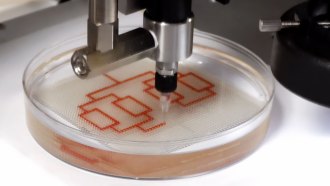
The movie Frozen inspired the icy, 3-D printing of blood vessels
Ice guides a 3-D printing method to make realistic, artificial blood vessels. One day, such vessels could be used in lab-grown organs.
- Chemistry
Here’s why teens’ body odor can be especially strong
The body odors of teens and younger kids share dozens of chemicals in common. But teens have some that infants and toddlers appear to lack.
- Math
Scientists Say: Correlation and Causation
There is a correlation between countries where people eat more chocolate and those that produce more Nobel Prize winners. But beware assuming that one variable causes the other.
- Environment
To limit pollution, new recipe makes plastic a treat for microbes
Microplastics made from fossil fuels take centuries to disappear. But the plant- and algae-based plastic can break down in weeks to months.
- Animals
Elusive worm-lizards sport weird, spooky skulls
CT scans of these mysterious creatures turned up bizarre internal features. They could offer clues about amphisbaenians’ largely unknown behavior.
- Artificial Intelligence
Artificial intelligence is making it hard to tell truth from fiction
Experts worry that by making it harder to tell what’s true, AI can threaten people’s reputations, health, fair elections and more.
- Tech
Lego bricks inspired a new way to shape devices for studying liquids
Inspired by Lego building blocks, the approach could enable design of adaptable tools to study how fluids move through very small spaces.
- Physics
Let’s learn about particles that help us peer inside objects
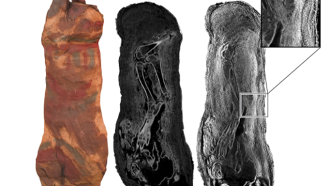
Particles such as muons, X-rays and neutrons help scientists peer inside fossils, mummies, pyramids, volcanoes and the human body.