Uncategorized
- Animals
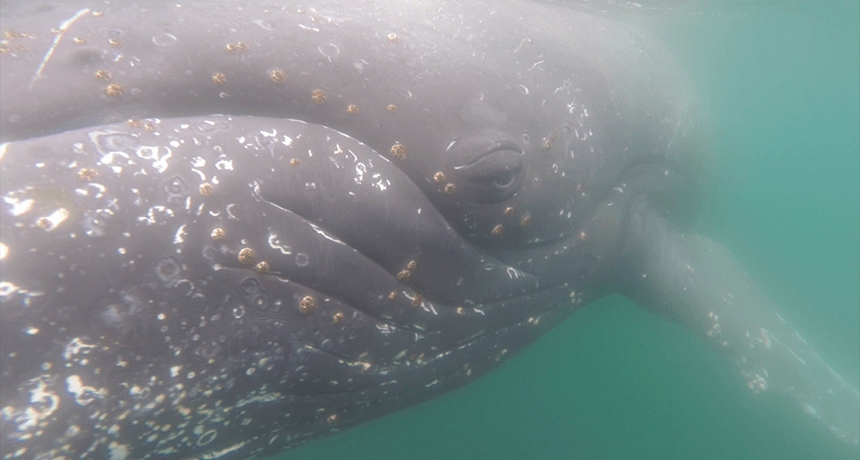
Humpbacks flap their flippers like underwater birds
Surprising new video shows humpback whales flapping their front flippers to move their massive bodies toward their prey.
- Climate
Scientists Say: Ozone
Ozone is a molecule made of three oxygen atoms. In a layer above the Earth, it protects us from harmful radiation, but too close to home, it can harm our health.
- Planets
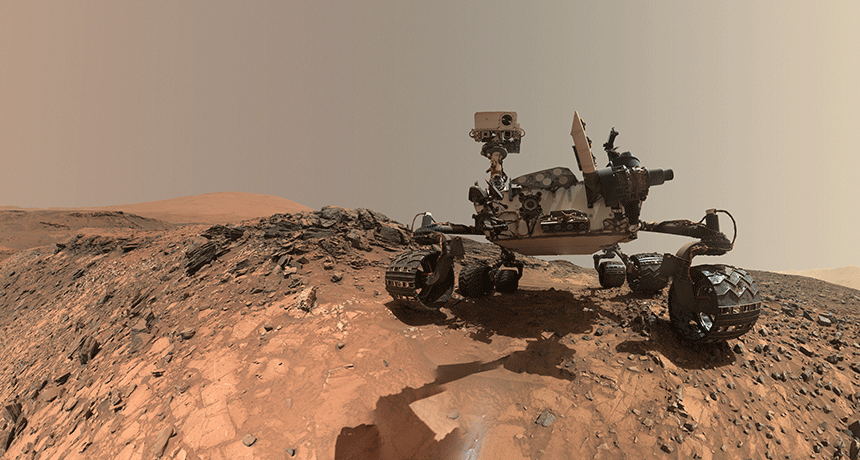
What the Curiosity rover has learned about Mars so far
Scientists take stock of what the Curiosity rover has learned after five years on Mars — and what else it may turn up in the next year or so.
- Physics
Early solar system may have slung giant mud balls
The first asteroids may have been great balls of mud. That could solve some puzzling traits of meteorites.
- Computing
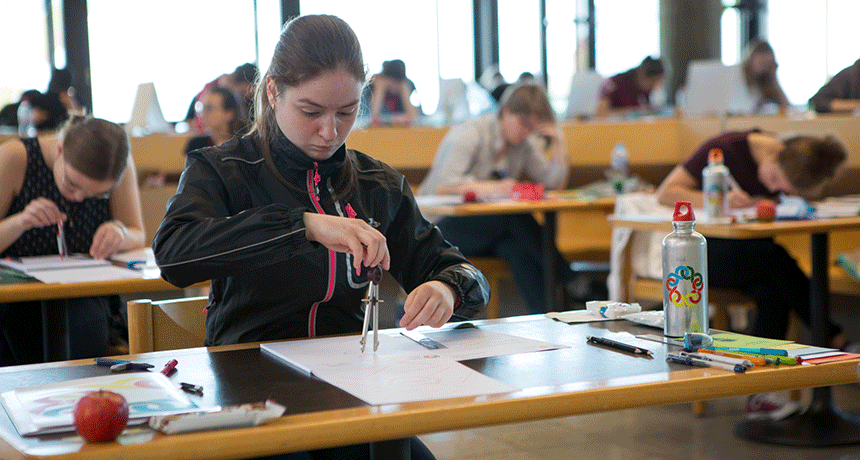
Math + teens + practice = a winning competition
Training for an Olympics of math helps students stretch their creativity and learn problem solving skills. If you like puzzles, you might want to check out these events.
- Math
Math isn’t just for boys
The United States won the International Mathematical Olympiad in 2015 and 2016. The big question: Why wasn’t there even one girl on either year’s team?
- Animals
Could a dragonfly’s wings be alive — and breathing?
Highly magnified image showing what looks like breathing tubes suggests the morpho dragonfly’s wings may be unexpectedly alive.
- Space
Newfound stars rank as farthest and one of the smallest
Astronomers have found two stars for the record books — the most distant ever observed and one of the tiniest now known.
- Genetics
Scientists hide a real movie within a germ’s DNA
A gene-editing technology called CRISPR helped scientists encode a short movie in the DNA of E. coli bacteria.
- Genetics
Explainer: How CRISPR works
Scientists are using a tool called CRISPR to edit DNA in all types of cells.
- Earth
Scientists Say: Speleology
This is the scientific study of caves, which can include what they’re made of, how they form and what lives in them.
- Materials Science
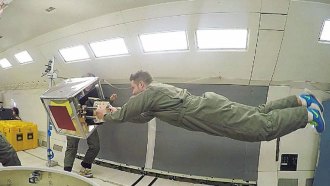
Robot grippers imitate gecko feet to help nab space junk
NASA is testing robotic, gecko-inspired gripper hands that might one day help clean up space junk.