
All Stories by Bethany Brookshire
- Brain
The most popular stories of 2015
Our readers love to read about health and wellness. Check out which stories were most popular.
-
Give a holiday gift of science
Science-themed gifts can be a lot of fun. These offer experiences that entertain and teach.
- Chemistry
Scientists Say: Joule
A joule is the amount of work done when a force of one newton moves an object one meter. It’s also the energy required to produce one watt for one second.
- Agriculture
New gene resists our last-ditch drug
Antibiotic resistance continues to grow. Now, scientists have found a tiny loop of DNA that resists a drug doctors use as a last line of defense.
-
Most needy don’t attend free online courses
Massive open online courses, or MOOCs, were supposed to make first-class college offerings free to the masses. But new data show that people who would benefit most from these classes are not who are attending them.
- Animals
Scientists Say: Quoll
This small marsupial is about the size of a housecat. It lives in Australia and New Guinea, where it is under threat from toxic toads.
- Animals
Scientists identify plankton from space
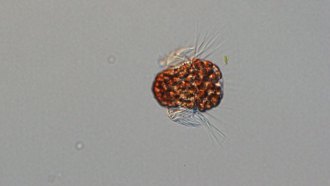
Plankton are often too tiny for our eyes to see. But when huge numbers bloom at once, they now can be ID’d from space, a new study shows.
- Chemistry
Scientists Say: Radioactive
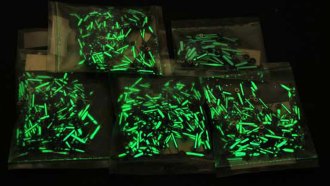
Some atoms have unstable centers. They periodically give off energy. This activity has a special description.
- Chemistry
Scientists Say: Osmosis
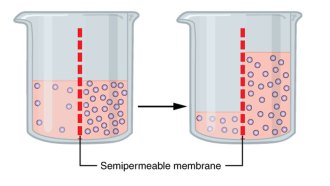
When two solutions are separated by a membrane where only the liquid can cross, the liquid will move from the side with a low concentration of dissolved materials to the side with a higher concentration. This movement has a special name.
-
Flaming rainbows: Pretty, but dangerous
Students love to see colorful fires in chemistry class. But a popular flaming-salts demo has resulted in some horrible injuries. Several groups warn of its dangers and propose a far safer version.
- Chemistry
Scientists Say: Dioxide
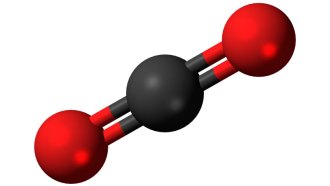
Carbon dioxide, sulfur dioxide and zirconium dioxide all have something in common. They are all molecules with two oxygens bound to some other element.
- Brain
Scientists Say: Neurotransmitters
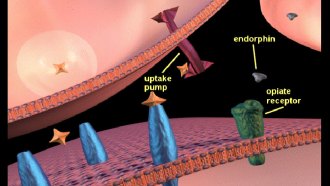
When brain cells need to communicate, they use chemicals as messengers. These molecules have a special name.