
All Stories by Bethany Brookshire
-
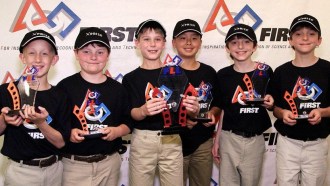
Kid inventors win big with a sign in the sky
A team of kids designed a high-flying sign to help disaster victims get critical information during a potential blackout.
-
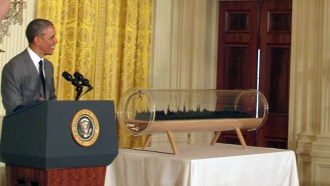
Inventors give the White House a Maker-over
Inventors invaded the White House yesterday for the first ever White House Maker Faire, decorating the lawn with robot giraffes and filling the house with technology and engineering.
-
‘Wannabe scientists’ write about real science
Brexton Pham had trouble finding scientific articles written for teens. He took matters into his own hands and created “Wannabe Scientist.”
-
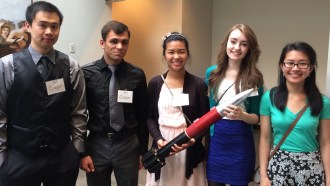
Rocket competition a blast for young scientists
Young rocket scientists competed in Washington, D.C. last month, flying rockets with precious cargo: eggs. The top 10 teams split $60,000 in prizes.
- Animals
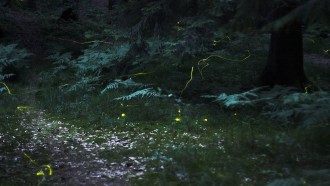
Free app tracks fireflies
Scientists are worried about firefly populations. Now you can use a free app to map firefly flashes, and contribute data to tracking the health of this popular summertime bug.
- Tech
New plane wheels land teen at big research competition
Landing a plane in high winds can be a risky business. Intel ISEF finalist Emerson Burkard designed a new swiveling plane wheel to make the process safer.
- Animals
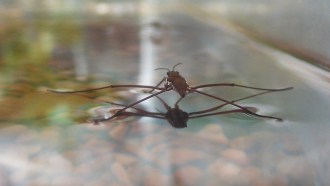
Teen studies water strider disappearing act
As a child, Xidian Zhang loved to play with water striders. Now they’re gone, and pollution may be the reason. This teen’s findings earned him a spot at the 2014 Intel International Science and Engineering Fair.
- Animals
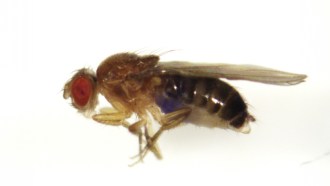
A science fair project makes bug killing sweet
Simon Kaschock-Marenda wanted to see how flies responded to different sweeteners. Along the way, he discovered an insecticide that would pose little risk to people. And the 14-year-old is now a published author on a scientific paper.
- Plants
Taking a long look at lichen
Lichens may not look like much, but they play a vital role in our ecosystems. ISEF finalist Madeline Handley decided learn more about the lichens in her native Alaska.
-
Young researchers take over the White House
Yesterday’s White House Science Fair brought students from around the country to the White House to meet the President and to be recognized for their science and engineering projects. Several were veterans of competitions run by Society for Science & the Public.
- Animals
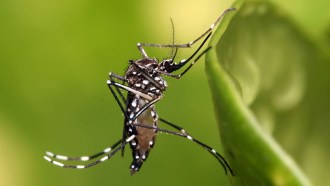
Killing mosquitoes with cashews
When dengue fever came to his hometown, Gabriel Galdino looked for ways to stop its carrier, the mosquito. His findings got him a spot at the 2014 Intel International Science and Engineering Fair.
-
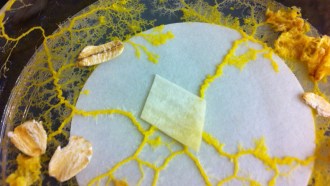
High school student studies slime mold smarts
Are slime molds “smart,” and what does that mean? Hannah McShea ran experiments to find out more about how slime molds behave and what it means for intelligence.