All Stories by Bethany Brookshire
-
Students in lab learn not to fear failure
Scientific papers often look like nothing but success. But two high school students learn that failure can be a step to success. You just have to learn from it.
-
Welcome to Cookie Science!
You don’t need a fancy laboratory or equipment to do science. Here, we show you how to conduct experiments at home — even in your kitchen.
-
Find floating forests for science
Kelp, a large type of seaweed, provides food and habitat for many ocean creatures. Now, scientists need your help to find out where kelp beds are and how they might be changing.
-
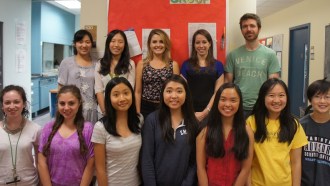
Teen’s lab experience benefits her mentor, too
Pairing a high school student with a graduate student helped the teen learn about science. But her ‘teacher’ may have learned just as much.
- Animals
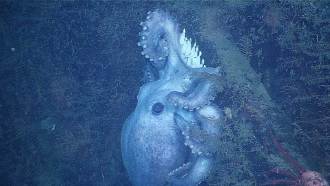
Octopus sets egg-nurturing record
Animals will do extraordinary things to help their babies survive. Consider ‘Octomom:’ She sat on one clutch of eggs for nearly 4.5 years.
-
Teachers can get teens into college labs
Early research experience is a great opportunity for a student. James Truglio shares how he gets teens from his class into summer research.
-
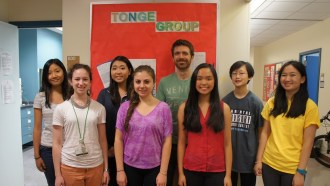
Scientists who open labs to teens promote STEM inspiration
Scientists willing to take high school students into their labs can inspire young scientists, and benefit their own lab team at the same time.
-
New movie on the little robotics team that could
A new movie shares the inspirational story of the 2004 Carl Hayden High School robotics team — and the challenges those students continue to face.
-
Academy helps science teachers up their game
Many newbies feel they don’t get a lot of support. The National Science Teacher Association has a program to help early-career teachers build a network.
-
Crabby project inspires young scientist
On a whim, Meera Joseph decided to try research. But in a university lab she uncovered parasites in a little-known crab — and discovered her love of research.
- Physics
Measure the width of your hair with a laser pointer
You can measure the width of a human hair with the help of a laser pointer, some math and a phenomenon called diffraction.
- Physics
Comic book heroine teaches science
Most people don’t think of superheroes as science teachers. But a comic book from the American Physical Society wants to change that. Meet Spectra, the human laser.