Questions for ‘Quashing the spotted lanternfly may require enlisting other species’
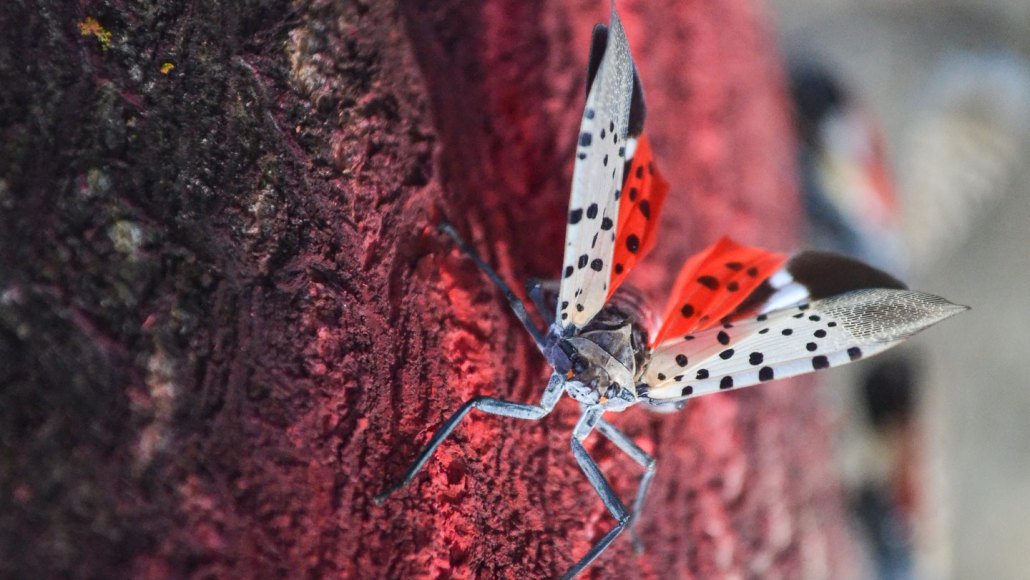
In the past decade, invasive spotted lanternflies (such as this adult found in Reading, Pa., in August 2018) have been spreading in the United States.
USDA Photo by Tanya Espinosa
Share this:
- Share via email (Opens in new window) Email
- Share on Facebook (Opens in new window) Facebook
- Share on X (Opens in new window) X
- Share on Pinterest (Opens in new window) Pinterest
- Share on Reddit (Opens in new window) Reddit
- Share to Google Classroom (Opens in new window) Google Classroom
- Print (Opens in new window) Print
To accompany ‘Quashing the spotted lanternfly may require enlisting other species’
SCIENCE
Before Reading:
- A native species originated in the region in which it lives. An invasive species is a non-native. However, scientists typically do not classify all non-native species as invasive. Besides being non-native, what else might lead a species to be considered “invasive”?
- Give one example of an invasive species besides the spotted lanternfly. Come up with an example of how an invasive species might disrupt an ecosystem. (This example can be a real-life example that you already know about, or it could be imaginary.)
During Reading:
- Name one country in which the spotted lanternfly (Lycoma delicatula) is not considered invasive. Explain why it’s not.
- What year do experts believe this pest appeared in the United States?
- During which season do spotted lanternflies lay eggs? During which season do these eggs hatch?
- Briefly describe the relationship between trees of heaven (Ailanthus altissima) and spotted lanternflies.
- During which stage of development do spotted lanternflies develop stripes?
- Describe any preferences spotted lanternflies have for various host plant species.
- Why are researchers particularly concerned about the possibility of this pest invading California or Washington?
- What does Matthew Helmus mean when he describes “random jumps” of the spotted lanternfly? Give an example of how humans might play a role in such a jump.
- Give an example of how researchers use bats to study the spread of the spotted lanternflies.
- Give an example of how scientists might use fungi to control populations of the spotted lanternfly.
After Reading:
- Describe the “bait” approach for lanternfly pest management. How does this approach differ from the “removal” method? Which approach do you think has a better chance of managing these insects over the short term, such as a single year? Which approach do you think has better potential for managing spotted lanternfly populations over five years or longer? Briefly explain your reasoning.
- This story says invasive species often take hold in a region due to a lack of predators. How much do you think a lack of predators contributes to a non-native species becoming invasive? Give an example from this story of how scientists might manage predators to control an invasive-species population.
- Consider the possibility that the spotted lanternfly’s native home range might harbor natural predators. Imagine scientists discover that such predators feed on the lanternfly’s eggs. Scientists believe that this predator helps control the lanternflies in their native environment — but this natural predator is not native to the United States. Now imagine that a worried citizen proposes bringing this predator to the United States to control lanternflies there. What concerns might you want to consider about this proposal? Explain how introducing a non-native predator might make this problem worse. Point to information in this story to support your answer.