Energy
- Tech
Artificial intelligence helped design a new type of battery
Supercomputing and AI cut the early discovery steps from decades to just 80 hours. The process led to a new solid electrolyte.
- Physics
Physics explains why poured water burbles the way it does
The loudness of falling water depends on the height of the pour and the thickness of the stream.
- Artificial Intelligence
To ‘green’ AI, scientists are making it less resource-hungry
Energy demands of ChatGPT and similar AI tools can threaten Earth’s climate. So researchers have begun redesigning how to run data centers and build AI.
- Physics
Experiment: Where does a bouncing basketball’s energy go?
Let’s explore whether energy loss to heat could explain why a basketball doesn’t bounce back to its original height.
- Physics
Heat makes water evaporate. Now it appears light can, too
In the lab, shining light on water made it evaporate faster. This never-before-seen effect, if real, might be happening naturally all around us.
- Physics
Experiment: How well do different materials create static electricity?
Why are some materials more susceptible to static cling than others? Investigate by making your own electroscope.
- Tech
Nanobots can now enter brain cells to spy on what they’re doing
Fleets of advanced versions may one day be able to detect disease and then go about surgically treating it — without ever opening the skull.
- Tech
Gravity ‘batteries’ might help a weighty renewable-energy problem
To store the energy generated by wind and solar power, researchers are looking at mammoth systems that raise and lower weights.
- Tech
New device can harvest clean energy from humid air anywhere
Unlike solar power, this new source of electricity is available day or night.
- Tech
High-tech solar ‘leaves’ create green fuels from the sun
Chemists make a liquid alternative to fossil fuels from carbon dioxide, water and the sun. Their trick? They use a new type of artificial leaf.
- Physics
Shouting into the wind may seem futile — but it’s really not
Sending a sound upwind, against the flow of air, actually makes the sound louder — only it doesn’t sound that way to the person making the noise.
- Materials Science
Analyze This: A new fabric mimics polar bears’ pelts for warmth
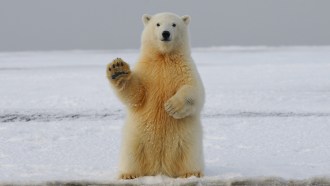
With layers that work like polar bears’ skin and fur, a material absorbs light and keeps it from escaping.