HS-ESS2-4
Use a model to describe how variations in the flow of energy into and out of Earth systems result in changes in climate.
- Climate
Heat waves appear more life-threatening than scientists once thought
This is bad news as a warming planet leads to growing numbers of excessive heat waves — and millions more people facing potentially deadly temperatures.
- Earth
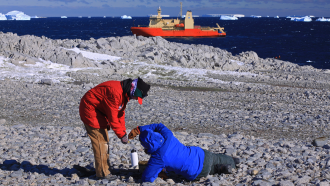
Uplifting Antarctic shores point to accelerating loss of glaciers
It appears the Pine Island and “Doomsday” Thwaites glaciers are losing ice — and shrinking faster — than at any time in the past 5,500 years.
- Earth
Scientists Say: Atmosphere
An atmosphere is an envelope of gas around a planet, dwarf planet or moon.
- Climate
A bold plan to save the planet turns carbon dioxide into stone
Scientists hope that capturing carbon dioxide this way will limit both further warming of our planet and an escalation of extreme weather events.
- Climate
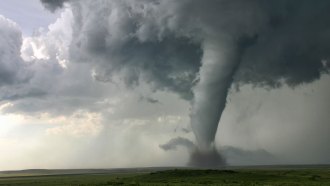
Let’s learn about tornadoes
Tornadoes are often spawned by thunderstorms — but can also emerge from hurricanes and wildfires.
- Climate
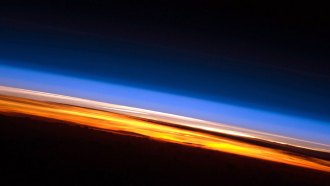
Climate change is upping the height of Earth’s lower atmosphere
The upper edge of the troposphere, the slice of sky closest to the ground, rose 50 to 60 meters (165 to 200 feet) a decade from 1980 to 2020.
- Animals
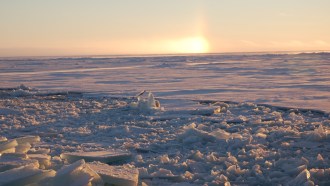
Can scientists develop an icy sanctuary for Arctic life?
The final refuge for summer sea ice may also protect the creatures that depend on it. Saving it is an ambitious goal with many hurdles.
- Earth
From icebergs to smoke, forecasting where dangers will drift
Smoke drifts. Fish eggs float downstream. Where such drifting things end up may seem a mystery. But research can predict where they’ll end up.
- Climate
Research on climate and more brings trio the 2021 physics Nobel Prize
Syukuro Manabe and Klaus Hasselmann pioneered work on simulations of Earth’s climate. Giorgio Parisi probed complex materials.
- Climate
Warming cities may see more rain — and frequent flooding
Scientists are seeking to understand why and how to mop up excess precipitation.
- Climate
Let’s learn about lightning
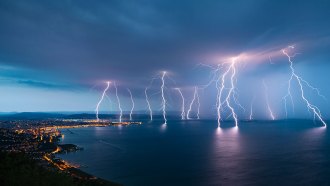
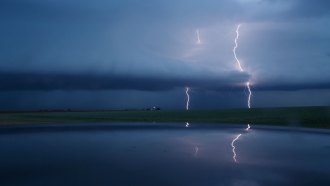
Around 100 times a second, every hour of every day, lightning strikes somewhere on Earth. It’s beautiful — and deadly.
- Earth
Here’s how lightning may help clean the air
Airplane observations show that storm clouds can generate huge quantities of air-cleansing chemicals known as oxidants.