HS-ETS1-1
Analyze a major global challenge to specify qualitative and quantitative criteria and constraints for solutions that account for societal needs and wants.
- Tech
High-speed lasers write data — to last millennia — inside glass
Project Silica is advancing a new way to store data — potentially forever. Some students plan to use this new media to send a message into space.
- Computing
This computer scientist uses math to help people be treated fairly
Ariel Procaccia has designed computer algorithms that help split up credit on group projects, distribute donations, pick citizens’ assemblies and more.
- Artificial Intelligence
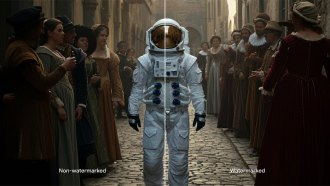
Google now adds watermarks to all its AI-generated content
Google’s AI-created content now hosts an invisible “signature.” A mathematical key can reveal the presence of this digital watermark, called SynthID.
- Artificial Intelligence
The brain of a tiny worm inspired a new type of AI
A liquid neural network mimics how neurons interact in the brain of a worm. This type of AI can better adapt to new situations.
- Health & Medicine
Python fangs inspired a fix for shoulder injuries common in sports
Curved teeth could grip fragile shoulder tendons without tearing, making rotator-cuff repairs stronger and more likely to last.
- Animals
Freeze-drying turned a woolly mammoth’s DNA into ‘chromoglass’
The 3-D structure of this now-glassy DNA revealed similarities — and differences — between woolly mammoths and elephants.
- Tech
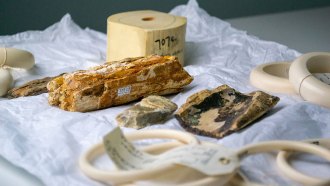
Laser-based tech can identify illegal elephant ivory
Most elephant ivory is illegal to sell. Ivory from extinct mammoths isn’t. They look similar, but lasers can tell the difference to help catch poachers.
- Artificial Intelligence
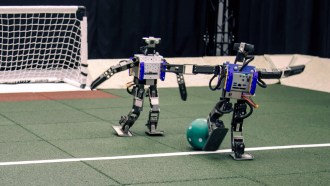
Soccer-playing robots show how nimble AI-powered machines can be
Being controlled by reinforcement learning — a type of AI — helps robots navigate tough terrain. This could bring computer smarts to the real world.
- Health & Medicine
Period blood could help diagnose diabetes and other illnesses
A new test for diabetes is the first diagnostic tool based on period blood. But it may be just the beginning.
- Plants
Gene editing may help rice better withstand climate change
Three genes may limit the ability of rice to handle dry or salty conditions. A Regeneron ISEF finalist shows that CRISPR could target and change them.
- Health & Medicine
New tool maps where U.S. heat can pose threats to your health
The daily updated HeatRisk maps use color coding to show where the health threat from heat is highest. The website also offers tips for staying safe.
- Artificial Intelligence
Does AI steal art or help create it? It depends on who you ask
With AI image generators on the scene, artists see both power and peril ahead.