HS-ETS1-2
Design a solution to a complex real-world problem by breaking it down into smaller, more manageable problems that can be solved through engineering.
- Tech
Bionic plants and electric algae may usher in a greener future
Some can aid the climate by removing pollutants. Others would just avoid dirtying the environment in the first place.
- Earth
Analyze This: Tropical forests have gotten patchier
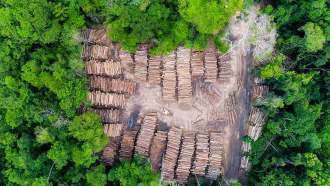
Although many of the world's forests have gotten less fragmented since 2000, tropical forests have gotten more chopped up, putting animals at risk.
- Animals
Adult corals have been frozen and revived for the first time
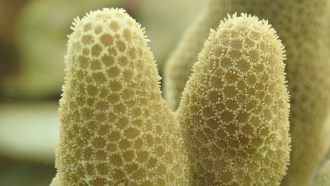
Living corals could be frozen for safekeeping. Scientists could later revive them to restore reef ecosystems that are withering in warming seas.
- Tech
AI can now turn blurry thermal vision into crisp images
Even when it’s pitch black, the new imaging system can create clear images while also accurately gauging distances to objects.
- Tech
Could Star Trek replicators exist?
Experts break down what’s possible and what’s not for this classic science-fiction invention.
- Tech
Nanobots can now enter brain cells to spy on what they’re doing
Fleets of advanced versions may one day be able to detect disease and then go about surgically treating it — without ever opening the skull.
- Tech
What is my pet saying? Scientists are working to find out
Researchers are using artificial intelligence for pet-translation apps. One day, it might put into words what our furry friends are vocalizing.
- Tech
New thermal ‘cloak’ keeps spaces from getting too hot or too cold
A prototype fabric could help keep cars, buildings and other spaces cooler during heat waves while also reducing greenhouse-gas emissions.
- Tech
Horses are inspiring this roboticist to build trustworthy robots
Computer scientist Eakta Jain is looking at human-horse interactions for ideas about how to design robots that work well with people.
- Plants
A single particle of light can kick off photosynthesis
In a new experiment with bacteria, a lone photon sparked the process of turning light to chemical energy.
- Materials Science
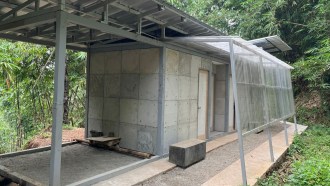
This house is partly made of recycled diapers
After being washed, dried, sanitized and shredded, used diapers were mixed with other materials to make a strong concrete.
- Space
Fairy tale inspiration could help rovers explore risky places
Taking a cue from Hansel and Gretel, scientists propose a way for rovers to send back data from treacherous terrain.