HS-ETS1-3
Evaluate a solution to a complex real-world problem based on prioritized criteria and trade-offs that account for a range of constraints, including cost, safety, reliability, and aesthetics, as well as possible social, cultural, and environmental impacts.
- Chemistry
Copper ‘foam’ could be used as filters for COVID-19 masks
The lightweight new material could serve as a washable and recyclable, eco-friendly alternative for many current mask filters.
- Physics
Staying grounded in space requires artificial gravity
On TV, people in space walk around like they’re on Earth. How can science give real astronauts artificial gravity? Spin right round, baby.
- Brain
Patterns in brain activity can identify who will struggle to read
Certain patterns of brain activity predict whether teens are strong readers or will struggle. Those diagnostic patterns show up even when doing math.
- Space
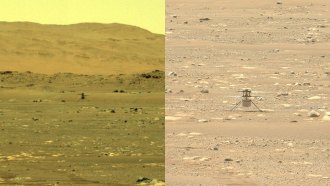
Ingenuity helicopter makes history by flying on Mars
The copter's 40-second-long flight in the Red Planet’s thin air is only the first in a planned series of daring flights.
- Animals
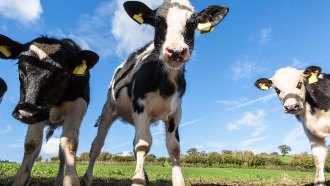
Analyze This: Cows burp less methane after early-life treatment
Calves that receive the 14-week treatment belch less of the greenhouse gas, possibly due to shifts in their gut microbes.
- Brain
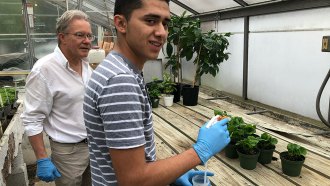
Scientists may have finally found how catnip repels insects
The plant deters mosquitoes and fruit flies by triggering a chemical receptor that, in some animals, senses pain and itch.
-
Moderna and Pfizer vaccines appear to cut coronavirus spread
The vaccines are about 90 percent effective at blocking infection, which should cut spread of the virus. And at least one vaccine works well in teens.
- Planets
Signs of a hidden Planet Nine in our solar system may be an illusion
Hints of the remote planet, also called Planet X, relied on clumped up orbits of bodies beyond Neptune. A new study suggests that clumping doesn’t exist.
- Computing
5G promises new energy savings for digital tech
A new way to transmit wireless communications promises time and energy savings by using networks of smaller cells.
- Computing
Greening your digital life
The less electricity you use while playing video games or using your devices, the less impact you’ll have on climate change.
- Tech
Training AI to be really smart poses risks to climate
As artificial intelligence models grow larger and consume more energy, experts have begun to worry about their impact on Earth’s climate.
- Health & Medicine
When COVID-19 comes for your science fair
When labs shut down due to COVID-19, teens took their science fair projects to the internet and … sometimes even to the bathroom.