HS-ETS1-3
Evaluate a solution to a complex real-world problem based on prioritized criteria and trade-offs that account for a range of constraints, including cost, safety, reliability, and aesthetics, as well as possible social, cultural, and environmental impacts.
- Chemistry
New glue offers to turn any small walking robot into Spider-Man
To climb walls, robot feet need to alternately stick and let go. A novel adhesive can do that. Its stickiness is controlled by electric fields.
- Animals
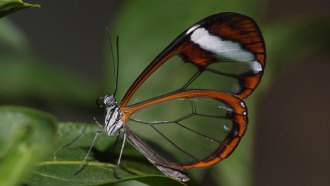
Uncovering secrets of the glasswing butterfly’s see-through wings
The tricks of its transparency include sparse, spindly scales and a waxy coated membrane.
- Climate
‘Zombie’ wildfires can reemerge after wintering underground
Climate change may make these not-quite-dead blazes more common. Scientists are learning to predict where a zombie might emerge.
- Brain
Father-son bond inspires sweets that model the shapes of molecules
These bite-sized gummy candies could spark interest in the world of chemistry, especially among students who can’t see.
- Health & Medicine
Will we all need COVID-19 booster shots?
Experts say not yet, but booster vaccines may be coming as new SARS-CoV-2 virus variants keep emerging.
- Chemistry
Sleep-friendlier lighting is on the way
Chemists have created a new glowing material for LEDs. It should lessen how much near-bedtime lighting impairs your ability to nod off.
- Animals
Mantis shrimp inspires somersaults of new soft robot
Its rolling acrobatics allow this robot to move especially swiftly — much as a fictional new Disney character can.
- Materials Science
‘Smart’ pasta morphs into fun shapes as it cooks
The trick to this shape-shifting are grooves cut into the raw pasta. Those grooves affect how the noodles swell as they cook.
- Planets
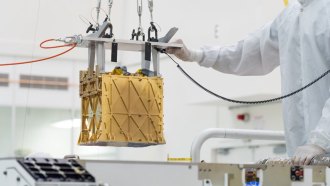
The Perseverance rover split CO2 on Mars to make breathable air
This oxygen-making experiment shows that astronauts could one day make air to breathe and to help fuel their ride back home.
- Computing
Will this smartphone app become your exercise coach?
When one teen couldn’t go to the gym, she invented an app to bring her gymnastics coach to her home. She succeeded and won a major award for it.
- Life
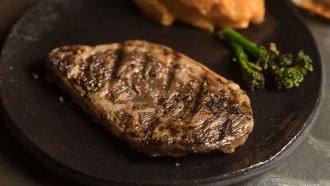
No animal died to make this steak
The ribeye steak is the first of its kind, and the latest in a growing list of meats printed with a 3-D bioprinter instead of being harvested from an animal.
- Computing
New device gets power from 5G signals grabbed from the air
A new way to harvest electricity relies on a tiny array of antennas and a lens. Together, they collect and focus 5G signals coming from any direction.