HS-ETS1-3
Evaluate a solution to a complex real-world problem based on prioritized criteria and trade-offs that account for a range of constraints, including cost, safety, reliability, and aesthetics, as well as possible social, cultural, and environmental impacts.
- Animals
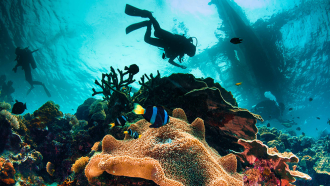
Cool Jobs: Diving for new medicines
Scientists mix research with underwater adventure as they search the oceans for new chemicals to treat infections, cancer and more.
- Health & Medicine
Plant extract mutes germs to fight infections
A plant extract prevents the aggressive behavior seen in some germs. Using it could fight the development of most bladder infections, a teen’s research suggests.
- Health & Medicine
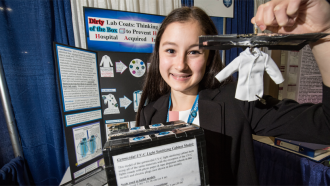
A light-filled box could blast bacteria from lab coats
Doctors can pick up bacteria on their lab coats. A teen has designed a special light-filled box to keep those coats from infecting others with those germs.
- Health & Medicine
This mix turns pink when sunscreen wears thin
Many people know to put on sunscreen. Remembering to put more on is harder. A teen invented an indicator that glows pink when it’s time to reapply.
- Microbes
Tweaked germs glow to pinpoint buried landmines
Finding landmines could become much safer with a new technology. It uses genetically modified bacteria that glow under laser light.
- Oceans
Teen’s invention can warn of deadly rip currents
A teen lifeguard from Australia has invented a buoy that can alert swimmers to the strong, swift and deadly rip currents that can sweep them dangerously far offshore.
- Life
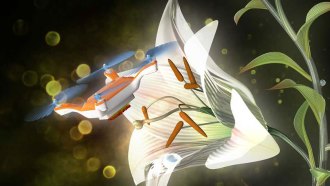
Fleets of flying robots could pollinate crops
Tiny flying drones use patches of sticky hair to capture pollen. One day they might join bees in pollinating crops.
- Physics
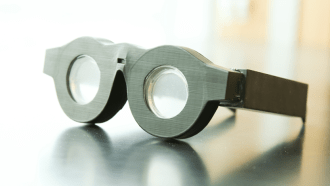
Auto-focus eyeglasses rely on liquid lenses
Engineers have designed what could be the last eyeglasses anyone would need. Right now, they’re bulky but smart. Liquid lenses are key to their adjustability — and those lenses focus automatically.
- Physics
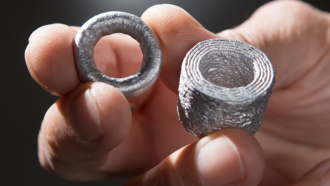
Father and son harness magnetic fields for new type of 3-D printing
A dad and his son have developed a new 3-D printing method in their basement. It harnesses pulsed magnetic fields to build metal objects one tiny aluminum drop at a time.
- Microbes
Teen invents a dip to keep germs away
A teen competing in the 2017 Regeneron Science Talent Search invented an eco-friendly chemical mix. It should keep bacteria from growing on treated paper, fabrics — including wound coverings — and more.
- Tech
Scientists turn toy into valuable tool for medical diagnosis
A human-powered ‘paperfuge,’ inspired by a toy, could serve as an easy, low-cost way to aid in medical diagnoses, even in regions of the world lacking access to electricity.
- Animals
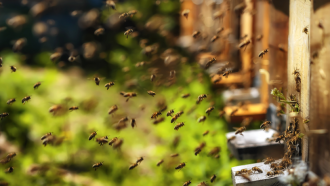
Cool Jobs: Abuzz for bees
These scientists are keeping bees healthy, making medicines for people from honey and constructing bee-inspired robots.