HS-ETS1-3
Evaluate a solution to a complex real-world problem based on prioritized criteria and trade-offs that account for a range of constraints, including cost, safety, reliability, and aesthetics, as well as possible social, cultural, and environmental impacts.
- Plants
Microbes give plants a way to make ‘meaty’ nutrients
Enzymes from animals helped a test plant make two nutrients essential for a balanced diet. Normally, those nutrients would only be found in meat.
- Artificial Intelligence
Scientists Say: Large language model
Large language models, or LLMs, are language-processing systems that underpin advanced AI technologies such as ChatGPT.
- Tech
For teens, virtual reality worlds aren’t all fun and games
More than a third of surveyed teens who used VR headsets reported they had experienced hate speech, bullying or harassment in virtual reality environments.
- Space
Jane Rigby helped make the James Webb telescope a superstar
The senior project scientist for the JWST, Rigby believes being part of the LGBTQ+ community has made her a better astronomer.
- Tech
A lucky lab accident produces Spider-Man-like silk
Researchers found a way to mimic Spider-Man’s web shooters in real life. This is the first adhesive that can stick to and lift things from a distance.
- Artificial Intelligence
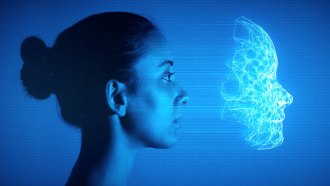
Want your own AI double? There could be big benefits — and risks
People are using AI to mimic their own voice, likeness and personality. Some are excited about these new digital clones. Others worry, what could go wrong?
- Plants
Plant and fungi parts help robots level up
Fusing machines with plants and fungi isn’t just sci-fi. A new generation of biohybrid devices could someday help in agriculture or energy production.
- Computing
Explainer: What is the internet?
The internet is a massive structure made up of cables, routers, exchange points, data centers, cell towers, antennas and more. All sorts of devices share data using this network.
- Tech
To stay cool, some future homes may build on past power-free tech
Accordion-pleated walls and other heat-managing structures could cool homes in hot, dry places naturally — without electricity.
- Life
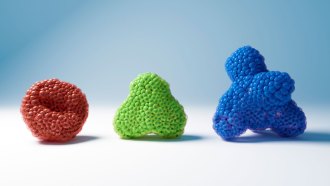
Scientists Say: Organoid
Lab-grown organ models mimic the functions of real organs and may open doors to a future of personalized medical care.
- Tech
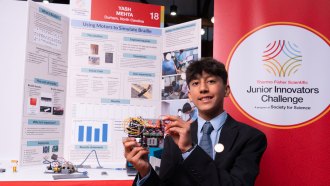
This young engineer built an affordable electronic braille reader
Thermo Fisher JIC finalist Yash Mehta got inspired to make a better braille device after visiting a school for blind students in Old Delhi, India.
- Artificial Intelligence
Scientists Say: Deepfake
Seeing should no longer mean believing, now that AI tech makes creating fake videos, audio and images easier than ever.