HS-LS2-1
Use mathematical and/or computational representations to support explanations of factors that affect carrying capacity of ecosystems at different scales.
- Agriculture
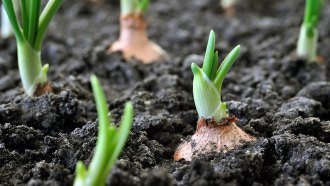
Healthy soils are life-giving black gold
Scientists explain why everyone needs to value the soils beneath our feet — and why we should not view them as dirt.
- Agriculture
Soil (and its inhabitants) by the numbers
Teeming with life, soils have more going on than most of us realize.
- Ecosystems
What you can do to improve soils
Soils are the life-sustaining structures under our feet. Here are some tips for keeping soils healthy. First rule of thumb: Give more than you take.
- Animals
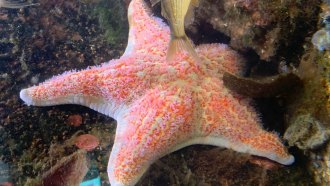
Choked by bacteria, some starfish are turning to goo
For years, researchers thought gooey, dying starfish were infected. Instead, these sea stars are suffocating. And bacteria may be behind it all.
- Ecosystems
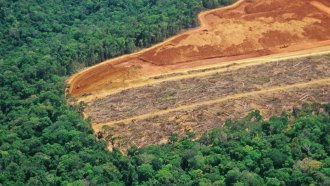
Can people protect as much space as nature needs?
To save biodiversity, nations are drafting a plan to protect 30 percent of Earth by 2030. Up for debate is how best to do that.
- Agriculture
Honeybees fend off deadly hornets by decorating hives with poop
Bees usually collect pollen and nectar. Scientists were surprised to find that Asian honeybees also gather animal dung to defend their hives.
- Agriculture
How to grow your own science experiment
Does fertilizer help plants grow better? You might expect it to, but how can you know? This experiment will help you test it yourself.
- Ecosystems
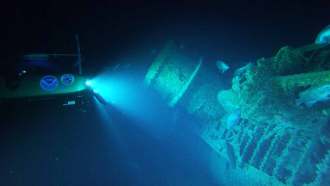
Analyze This: Shipwrecks provide a home for bottom-dwelling fish
Fish have found a habitat in a submarine and freighter that sunk to the seafloor during World War II.
- Animals
When physicians and veterinarians team up, all species benefit
When doctors for people and those for animals share their expertise, they can discover new ways to take better medical care of all species.
- Animals
Whales get a second life as deep-sea buffets
When a whale dies and sinks to the seafloor, it becomes a feast for hundreds of different types of creatures.
- Life
If bacteria stick together, they can survive for years in space
Tiny clumps of bacteria can survive at least three years in outer space. This raises the prospect of interplanetary travel by microbial life.
- Ecosystems
Soggy coastal soils? Here’s why ecologists love them
Coastal wetlands can protect our shores from erosion, flooding and rising sea levels.