HS-LS2-8
Evaluate the evidence for the role of group behavior on individual and species' chances to survive and reproduce.
- Brain
Puberty may reboot the brain and behaviors
Facing adversity early in life can hurt how children learn to deal with stress. Puberty can sometimes offer a chance to reset how the body responds to stress, returning it to normal.
- Genetics
A Hong Kong man got the new coronavirus twice
His is the first confirmed case of reinfection with this virus. His second bout was detected by accident, because he showed no symptoms.
- Animals
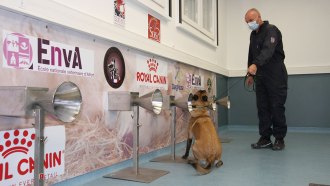
Viral scents? Dogs sniff out coronavirus in human sweat
Researchers train dogs to sniff out COVID-19. In the United Arab Emirates, sniffer dogs have already begun identifying infected passengers at airports.
- Animals
Superblack fish can disappear in the deep sea’s darkness
Some fish that live in the ocean’s depths are superblack due to a special layer of light-absorbing structures in their skin.
- Animals
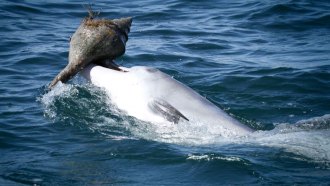
Dolphins can learn from their peers how to use shells as tools
Some bottlenose dolphins seem to look to their peers, rather than mom, to learn how to trap prey in shells.
- Health & Medicine
Coronavirus outbreak at camp infected more than 200 kids and staff
Think kids don’t get COVID-19 and spread it? Think again. An outbreak at a Georgia summer camp left 260 people infected. The rate was highest in kids under 10.
- Animals
Flying snakes wriggle their way through the air
Flying snakes go tens of meters (yards) without wings. They do it by undulating back and forth and up and down, a new study shows.
- Earth
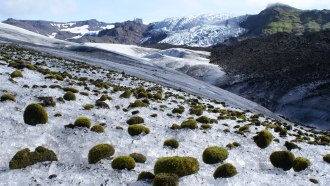
On an Alaskan glacier, little green moss balls roll in herds
Oval balls of moss, nicknamed ‘glacier mice,’ roll across some glaciers. A new study explores the mysteries behind their herd-like motion.
- Life
For teens, big problems may lead to meaningful research
Several teens who competed at the Regeneron Science Talent Search applied their STEM know-how to solve problems they or their communities faced.
- Animals
What you need to know about ‘murder hornets’
Two new specimens of the world’s largest hornet have just turned up in the United States. Here’s what to make of them and other alien-hornet invaders.
- Health & Medicine
Remdesivir is looking even better at fighting COVID-19
New studies suggest the drug remdesivir not only speeds recovery of COVID-19 patients in the hospital, but lowers their risk of death from the virus.
- Animals
Pooping ducks can shed the live eggs of fish
Some carp eggs survived and even hatched after being pooped by a duck. This may help explain how invasive fish reach isolated waterways.