Matter and Its Interactions
- Chemistry
Scientists Say: Cellulose
Cellulose is an abundant natural polymer found in plants and algae. It’s used to make everything from paper to clothing.
- Chemistry
New process can transform urban CO2 pollution into a resource
Researchers have developed a liquid metal that breaks down carbon dioxide in the air, converting it from a climate threat into a valuable raw material.
- Physics
Explainer: How do mass and weight differ?
Learn why these terms aren’t the same and which to use where. And should you report your results in kilograms? Pounds? If in doubt, try using newtons.
- Math
Why some icicles become scallops not spikes
The newfound — and at times quirky — shapes reflect the density of water surrounding submerged ice.
- Earth
Widely used pesticides may threaten Earth’s ozone layer
Data show a major class of long-used “eco-friendly” copper chemicals unexpectedly react with soil, making gases harmful to Earth’s protective ozone layer.
- Earth
Scientists Say: Pollution
Pollution is any substance or form of energy released into the environment that is harmful to people or other living creatures.
- Chemistry
Clothes dryers may be a major source of airborne microplastics
Scientists thought washing machines were a leading contributor of microplastics. Now it appears dryers may be an even bigger problem.
- Chemistry
No, organic molecules alone don’t point to life on Mars
These carbon-based molecules, found in a meteorite, may reflect merely a mixing of water and minerals on the Red Planet over billions of years.
- Chemistry
Explainer: What are fats?
A fat molecule's three long chains of carbon and hydrogen atoms repel water, stash energy and keep living things warm — even in the bitter cold.
- Chemistry
Scientists Say: Decay
This word can refer to rotting flesh or the transformation of radioactive atoms.
- Materials Science
Let’s learn about glass
Unlike the atoms in other solids, the atoms in glass don’t exist in an orderly crystal structure. They’re more jumbled up, like the atoms inside liquids.
- Tech
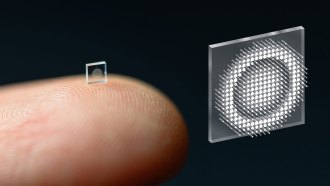
This crumb-sized camera uses artificial intelligence to get big results
Researchers have developed a camera the size of a coarse grain of salt that takes amazingly clear photos.