MS-ESS2-4
Develop a model to describe the cycling of water through Earth's systems driven by energy from the sun and the force of gravity.
More Stories in MS-ESS2-4
- Earth
Let’s learn about rivers
Rivers vary a lot in size and terrain, but all share a few basic features.
- Environment
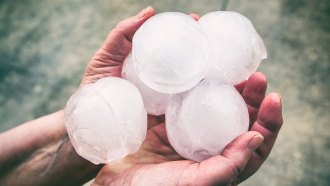
Watch out: Hail can get really big!
New data from hailstones suggest most of these icy chunks may not form the way scientists long thought.
- Environment
Study uncovers secrets in water’s underground treks
Water's subterranean travels can be long, slow — and carry pollutants far from where they first got drawn into the Earth.
- Planets
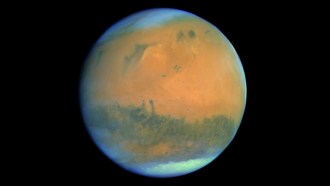
Mars’ rust suggests it was once wet — and its seas frigid
Mars may once have held enough water to fill oceans and form coastlines. And the planet’s red dust hints that its seas would have been quite frigid.
- Earth
Scientists Say: Frost Quake
When wet soil abruptly freezes, it creates high pressure underground. When the pressure releases, it can trigger a mini-earthquake called a frost quake.
- Earth
Surprise! The jet stream can trigger cloud formation
Most cloud-seeding particles may come from a newly discovered mechanism — stratospheric intrusion.
- Tech
Gravity ‘batteries’ might help a weighty renewable-energy problem
To store the energy generated by wind and solar power, researchers are looking at mammoth systems that raise and lower weights.
- Physics
How salty does the sea have to be for an egg to float?
Some objects float on top of the ocean, and other objects sink to the bottom. Why? Try this eggs-periment to find out!
- Climate
Greenland’s inland ice is melting far faster than anyone thought
Inland melting of the Northeast Greenland Ice Stream is accelerating — and may contribute far more to sea level rise than earlier estimates suggested.