MS-LS2-5
Evaluate competing design solutions for maintaining biodiversity and ecosystem services.
- Animals
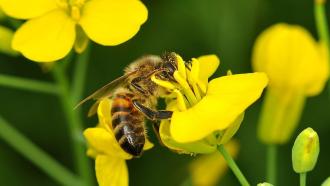
Pesticides offer bees a risky allure
Honeybees and bumblebees sometimes cannot taste or avoid pesticides called neonicotinoids. And that may expose some of these important pollinators to harm.
- Agriculture
Ditching farm pollution — literally
An Indiana project shows how fighting fertilizer runoff can save farmers money, protect wild habitats and prevent harmful algae blooms.
- Agriculture
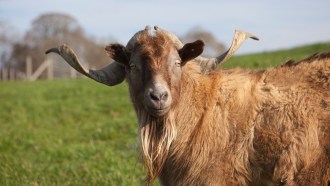
Livestock: A need to save rare breeds
New studies and ongoing work highlight why society should save rare livestock breeds — and the part that technology can play.
- Animals
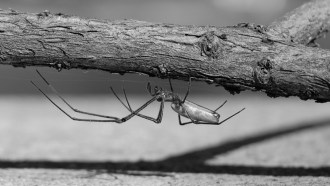
Spidey sense: Eight-legged pollution monitors
Spiders that prey on aquatic insects can serve as sentinels that naturally monitor banned chemicals that still pollute many rivers across the United States.
- Animals
Tiny — but mighty — food-cleanup crews
Discarded food wastes can turn city spaces into food courts for disease-carrying rats and pigeons. But a new study shows tiny cleanup crews — especially pavement ants — are doing their best to eliminate such wastes. This, in turn, makes cities less attractive to bigger pests.
- Microbes
Recycling the dead
When things die, nature breaks them down through a process we know as rot. Without it, none of us would be here. Now, scientists are trying to better understand it so that they can use rot — preserving its role in feeding all living things.
- Environment
Watering plants with wastewater can spread germs
Recycled waste water may slake the thirst of outdoor plants. But it also can spread bacteria, a new study finds — germs that antibiotics may not be able to kill.
- Microbes
The Bahamas’ African roots
Ocean bacteria may have built the Bahama islands, fed by dust blown across the Atlantic from the Sahara Desert.
- Microbes
Explainer: What you can do to fight antibiotic resistance
Doctors and scientists are not the only people who can help preserve the effectiveness of life-saving antibiotics. Even patients have a role to play, as these tips show.
- Animals
A library of tweets (and howls and grunts)
The Macaulay Library houses a world of animal sounds. And now anyone with an Internet connection can check out this audio collection.
- Animals
Mite-y discoveries!
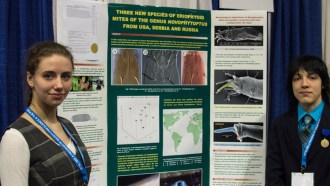
Two teens from Russia discovered tiny mites living inside grass-like plants called rushes. Three of the species they turned up are new to science.
-
Slime: A new way to protect plants from slugs
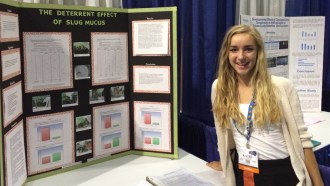
Katie Gwaltney had a slug problem in her garden. She decided to try using the slugs’ own slime against them. Her findings earned the high school freshman a finalist’s spot at this week's Intel International Science and Engineering Fair.