MS-LS2-5
Evaluate competing design solutions for maintaining biodiversity and ecosystem services.
- Animals
Tasmanian devils begin to resist infectious cancer
A deadly contagious cancer is spreading among Tasmanian devils. But the animals are evolving resistance, a new study finds.
- Animals
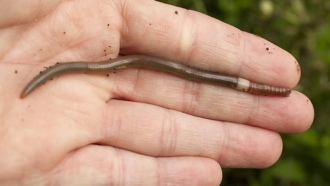
Earthworms: Can these gardeners’ friends actually become foes?
Asian jumping worms can strip leaf litter from floor of U.S. forests, new data show. Many native plants need that leaf litter for their seeds to germinate.
- Ecosystems
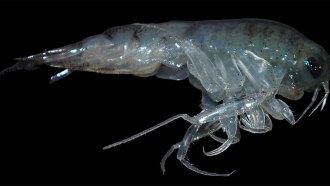
Algae embedded in sea ice drive the Arctic food web
Scientists traced where zooplankton in the Arctic get their energy from. Many open ocean species rely on algae found in sea ice, which is disappearing.
- Archaeology
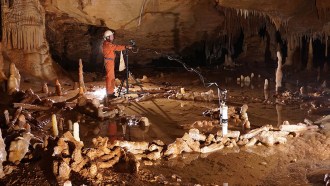
Neandertals: Ancient Stone Age builders had tech skills
Neandertals built stalagmite circles in a French cave 176,500 years ago. These structures show that these ancient human cousins had social and technical skills.
- Animals
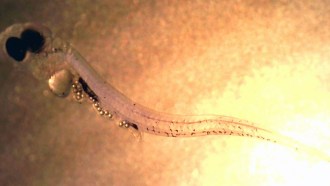
Uh oh! Baby fish prefer plastic to real food
Given a choice, baby fish will eat plastic microbeads instead of real food. That plastic stunts their growth and makes them easier prey for predators.
- Earth
How ancient African fish feed today’s Amazon
Many of the world’s lushest tropical forests would starve if winds didn’t bring them nutrient-rich dust from across an ocean.
- Chemistry
Microbes mine treasure from waste
Like miniature factories, bioreactors house microbes recruited to chew through wastes to clean dirty water, make chemicals or generate electricity.
- Animals
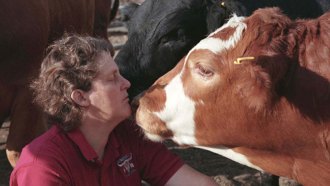
Profile: A human touch for animals
Temple Grandin uses her own autism to understand how animals think. The animal scientist is famous for fostering the humane treatment of livestock.
- Animals
Wildlife forensics turns to eDNA
Environmental DNA, or eDNA, tells biologists what species have been around — even when they’re out of sight or have temporarily moved on.
- Agriculture
Made in the shade
Agroforestry combines woody plants and agriculture. Growing trees alongside crops and livestock benefits wildlife, environment, climate — and farmers.
- Agriculture
Organic food starts to prove its worth
Organic food often comes with a higher price. But research is showing that food grown this way can be better for the environment — and possibly for us.
- Animals
Biowarfare saves bats from killer fungus
Good news for bats. Those infected with white-nose syndrome may be cured by a brief exposure to fumes from therapeutic bacteria.