Space
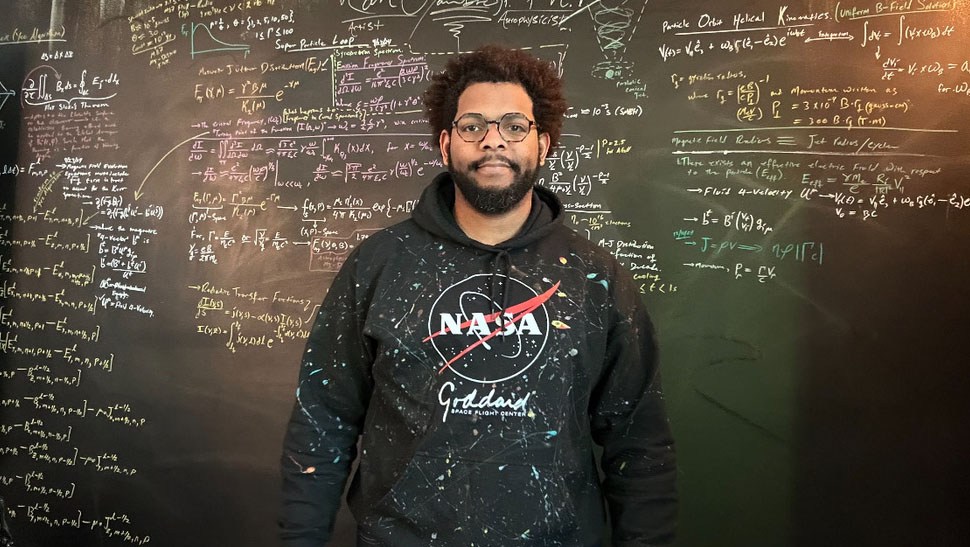
Art helped this astrophysicist make sense of math
Ronald Gamble takes cues from the arts to study supermassive black holes and their spacetime geometry.
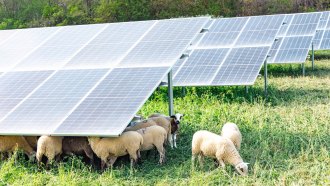
This win-win technology means future farmers may produce both food and electricity.
To pick up speed, half-pipe skaters pump — move between crouching and standing — as they roll. A new study shows the fastest way to the top.
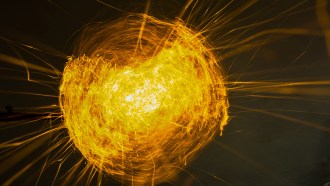
A black hole made of pure light —or kugelblitz — may be possible, at least in theory. But in practice: impossible.
Let’s explore whether energy loss to heat could explain why a basketball doesn’t bounce back to its original height.
Why are some materials more susceptible to static cling than others? Investigate by making your own electroscope.
Kinetic energy depends on an object’s motion; potential energy hinges on its position. The relationship between the two sits in a special balance.
A new device exploits the contrast between bright spots and shade to produce a current that can power small electronics.
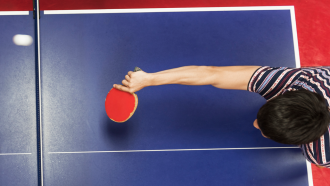
Scientists at the Georgia Institute of Technology built a 'smart' surface on which to play table tennis. It can track the location, speed and direction of the ball.
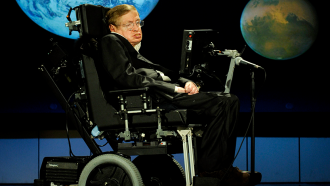
People with disabilities are as varied as the careers some of them pursue in science, technology, engineering and math.