MS-PS4-2
Develop and use a model to describe that waves are reflected, absorbed, or transmitted through various materials.
- Materials Science
Let’s learn about glass
Unlike the atoms in other solids, the atoms in glass don’t exist in an orderly crystal structure. They’re more jumbled up, like the atoms inside liquids.
- Tech
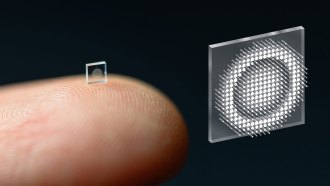
This crumb-sized camera uses artificial intelligence to get big results
Researchers have developed a camera the size of a coarse grain of salt that takes amazingly clear photos.
- Physics
Explainer: Telescopes see light — and sometimes ancient history
Different kinds of telescopes on Earth and in space help us to see all wavelengths of light. Some can even peer billions of years back in time.
- Planets
The long-awaited James Webb Space Telescope has a big to-do list
The James Webb Space Telescope has been in the works for so long that new fields of science have emerged for it to study.
- Chemistry
Snail slime + gold could boost the power of sunscreens and more
These two strange ingredients could make skin-care products that are better for both our skin and the environment.
- Chemistry
This glitter gets its color from plants, not a synthetic plastic
In the new material, tiny arrangements of cellulose reflect light in specific ways to create vibrant hues in an environmentally friendly glitter.
- Animals
Here’s why ducklings swim in a row behind mom
Baby ducks save energy by surfing their mother’s waves, but only if they do it in an orderly line.
- Physics
Future cars may offer personal sound zones — no earphones needed
Zones that offer each passenger personal listening are closer to reality. A new design improves performance by adapting to the conditions in your car.
- Earth
Let’s learn about auroras
A gust of charged particles from the sun called the solar wind lights up auroras on Earth — and on other planets.
- Materials Science
These colorful butterflies were printed with transparent ink
Clear ink creates a whole rainbow of colors when printed in precise, microscopic patterns. This phenomenon is known as structural color.
- Chemistry
Chemistry solves a French royal mystery
Ink analysis reveals the hidden words of Marie Antoinette's letters and who tried to hide them.
- Earth
Explainer: How auroras light up the sky
The northern and southern lights are considered natural wonders of the world. Here’s how these and related splendid sky glows form.