Waves and Their Applications in Technologies for Information Transfer
- Life
If bacteria stick together, they can survive for years in space
Tiny clumps of bacteria can survive at least three years in outer space. This raises the prospect of interplanetary travel by microbial life.
- Brain
You don’t see as much color as you think
It might seem like we live in a world full of color. But when scientists flip it into black and white, most people never notice the switch.
- Computing
A robot referee can really keep its ‘eye’ on the ball
Have you ever yelled at a referee for making a bad call? Technology has begun taking over some calls in an attempt to make sports fairer.
- Planets
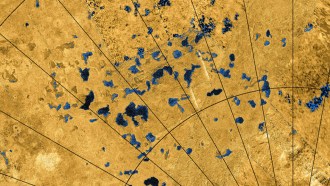
Saturn’s moon Titan may host lots of dried lakes
Suspicious spots around the moon’s middle could be the beds of ancient lakes. If so, this might solve a 20-year-old mystery.
- Physics
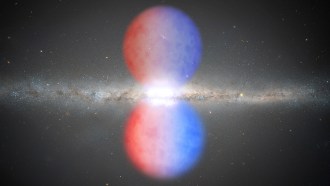
Spotted: Milky Way’s giant gas bubbles in visible light
The bubbles have different colors, based on how the gas inside them moves. That could give clues to how the bubbles developed.
- Physics
Understanding light and other forms of energy on the move
Radiation needn’t be scary, especially if it allows us to see our family or use our cell phones. Here’s a guide to light and other types of emitted energy.
- Brain
Explainer: How our eyes make sense of light
It takes a lot for images before the eyes to be 'seen.' It starts by special cells sensing the light, then signals relaying those data to the brain.
- Physics
A contrast between shadows and light can now generate electricity
A new device exploits the contrast between bright spots and shade to produce a current that can power small electronics.
- Animals
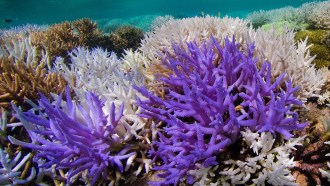
Going bright may help corals recover from bleaching
When some corals bleach, they turn neon colors. Flashy hues may be part of a response that helps these corals recover and reunite with their algae.
- Animals
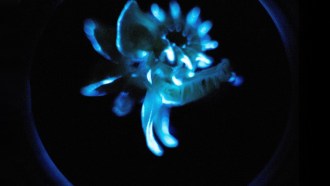
This tube worm’s glowing slime may help sustain its own shine
Snot oozed by a marine tube worm can glow for up to 3 full days. The secret of how this works might lead to long-lasting lights that glow on and on.
- Math
Why sports are becoming all about numbers — lots and lots of numbers
Sports once focused on muscles, skill and tactics. Now math is becoming almost as important. It helps assess players — and improve their tools.
- Physics
Explainer: Rainbows, fogbows and their eerie cousins
Light shining through a water droplet can make more than just a rainbow. A range of other colorful arcs also can develop.