Waves and Their Applications in Technologies for Information Transfer
- Animals
Fin whales could help scientists map what lies below the seafloor
Fin-whale calls are loud enough to penetrate into Earth’s crust, offering scientists a new way to study the properties of the ocean floor.
- Archaeology
Unusual mud shell covers an Egyptian mummy
In ancient Egypt, commoners may have been mummified and then encased in mud to repair damage to the body or to imitate royal techniques used with royals.
- Brain
New technology can get inside your head. Are you ready?
New technologies aim to listen to — and maybe even change — your brain activity. But just because scientists can do this, should they?
- Earth
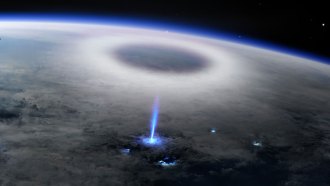
Space station sensors saw how weird ‘blue jet’ lightning forms
A mysterious type of lightning in the upper atmosphere has been traced to a brief, bright flash of light at the top of a storm cloud.
- Physics
Scientists Say: Piezoelectric
Piezoelectric materials produce an electric voltage when they are bent or squished. This can let us harvest electricity from movement.
- Physics
Physicists have clocked the shortest time span ever
The experiment revealed how long it takes light to cross a hydrogen molecule: just a couple hundred zeptoseconds.
- Physics
What did you say? Fabric masks can really muffle voices
Some types of face masks muffle speech more than others — something that teachers should take into account.
- Space
Our feverish universe is getting hotter every day
For the first time, astronomers have taken the temperature of the cosmos at different times in its history. Galaxy clusters are cranking up the heat.
- Chemistry
Bye-bye batteries? Power a phone with fabric or a beacon with sound
New piezoelectric systems produce electricity in unusual ways, such as when a certain nylon bends or underwater ceramics vibrate.
- Chemistry
Flexible devices may help clothes solar power your screens
A fluorescent polymer duo boosts the efficiency of solar cells. One day this material may coat your jacket, hat or backpack to provide power on the go.
- Tech
Computers are changing how art is made
Some people have challenged the idea that artificial intelligence can be creative. But new software can provide inspiration to artists or fully partner with them in the creative process.
- Planets
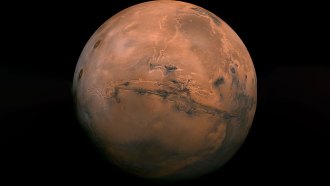
Let’s learn about Mars
Traveling to Mars offers many challenges, including life without gravity, cosmic rays and communication delays.