Chemistry
- Chemistry
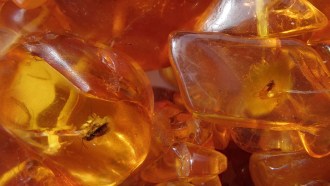
Identifying ancient trees from their amber
A Swedish teen’s analyses of a sample of amber may have uncovered a previously unknown type of ancient tree.
- Chemistry
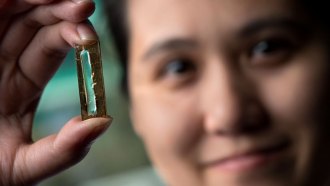
Nanowires could lead to super-long-lived battery
Scientists have long been looking for ways to make rechargeable batteries that last forever. They now may be close. Their solution: gel-dipped nanowires.
- Chemistry
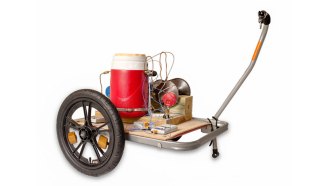
Keeping samples cool without electricity
When vaccines and blood get too warm or cold, they can become useless. Two teens invented ways to keep their temperatures just right, no matter where they are.
- Chemistry
Key sugar for life on Earth could have formed in space
Ribose, a sugar in RNA, may have formed in space and then rained down on a young Earth, a new study suggests.
- Chemistry
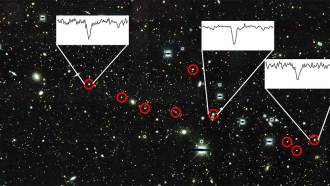
Dwarf galaxy spawned heavy elements
A study of nine stars in the dwarf galaxy Reticulum II found heavy elements. They had been produced after a violent stellar event sparked a chemical chain reaction.
- Chemistry
Particles in air help fatten clouds’ water droplets
Making their own clouds has shown scientists how the fattest water droplets form. Understanding this could lead to better forecasts of climate change.
- Chemistry
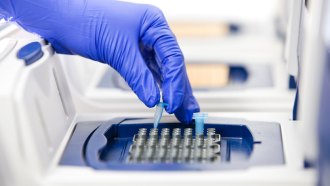
Gotcha! New test stalks diseases early
Chemists screen blood for disease markers by adapting a common DNA test. The test can find disease earlier, when it also may be easier to treat.
- Chemistry
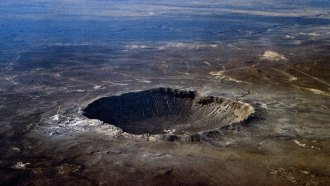
Smash hit: Making ‘diamond’ that’s harder than diamonds
Scientists had suspected extreme meteorite impacts might turn graphite into an unusual type of diamond. Now they’ve seen it happen — in under a nanosecond.
- Chemistry
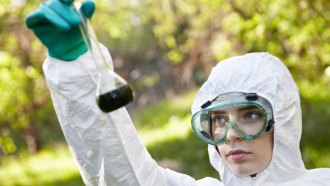
Microbes mine treasure from waste
Like miniature factories, bioreactors house microbes recruited to chew through wastes to clean dirty water, make chemicals or generate electricity.
- Health & Medicine
Explainer: Some supplements may not have what it takes
Dietary supplements made from plants may not contain all of the chemicals that usually make a particular plant healthy for humans.
- Chemistry
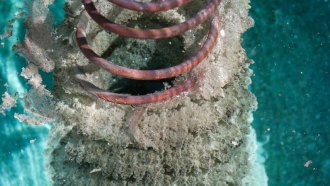
Gulf oil spills could destroy shipwrecks faster
In the Gulf of Mexico, leftover crude oil from the Deepwater Horizon spill may be speeding the corrosion of old shipwrecks.
- Chemistry
Scientists Say: Precipitation
Chemicals can dissolve into a solution, but when they come out, they precipitate.