Chemistry
- Chemistry
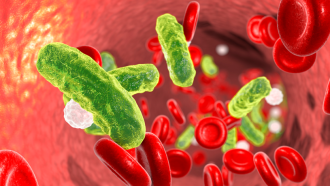
Magnets may one day cull deadly germs from blood
A new technique for slowing the deadly condition called sepsis would use tiny iron particles and magnets.
- Chemistry
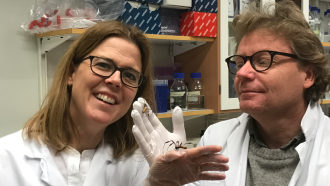
How to spin synthetic spider silk
A new method for spinning artificial spider silk combines parts of proteins from two species and mimics what happens in a spider’s silk-forming gland.
- Chemistry
Here’s how hot water might freeze faster than cold
There’s a new explanation for how hot water freezes faster than cold water. But not everyone agrees it’s right, or that the effect can happen at all.
- Chemistry
Fingers leave tell-tale clues about you on your phone
Analyzing chemicals on a cell phone tells researchers what the caller had been up to. That includes recent meals and where they'd been.
- Chemistry
Scientists Say: Sublimation
Matter doesn’t always go from solid to liquid to gas. Sometimes it skips a step.
- Chemistry
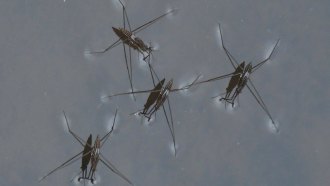
Scientists Say: Surface tension
Surface tension is what makes water in your glass seem like it’s covered by an invisible membrane holding it together.
- Chemistry
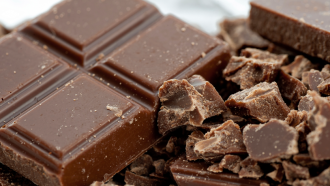
Milking chocolate for its health benefits
Researchers figure out how to give milk chocolate the same health benefits as dark chocolate. The secret ingredient is an extract from peanut skin.
- Chemistry
Scientists Say: Unsaturated fat
These fats are found in foods like olive oil. It’s their special bonds that make them go with the flow.
- Chemistry
New coating for metals could cut engine wear
Scientists have developed a new coating for engine parts that could reduce friction and engine wear. One big benefit: Cars may require fewer oil changes.
- Chemistry
Scientists Say: Fatty acid
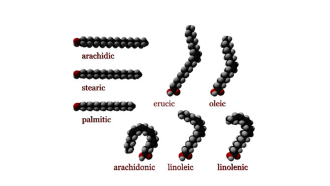
Fats are important, especially fatty acids. These molecules serve many purposes, but they are all constructed the same way.
- Chemistry
Chemistry Nobel honors pioneers of world’s smallest machines
Three chemists are being honored with a Nobel Prize for their pioneering work creating itty bitty machines, including a microscopic ‘nanocar.’
- Health & Medicine
Why trans fats became a food villain
Trans fats are now known as a dietary villain. But in the beginning, scientists thought they were better than butter.