Fossils
- Fossils
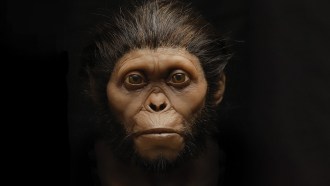
How scientists can get a better picture of our extinct relatives
Facial reconstructions of extinct species have historically been more art than science. Some researchers hope to change that.
- Animals
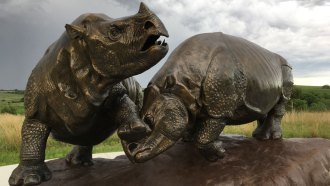
Rhinos, camels and bone-crushing dogs once roamed Nebraska
Scientists digging into the remnants of an ancient watering hole in Nebraska discovered evidence of an Africa-like savanna, complete with rhinos.
- Fossils
Dinosaur-killing asteroid radically changed Earth’s tropical forests
The asteroid collision initially reduced the diversity in what had been sunny tropical rainforests. In time, the forests would become permanently darker.
- Animals
Scientists Say: Dinosaur
Dinosaurs emerged between 243 and 233 million years ago. While some died out 66 million years ago, others are still with us — birds.
- Fossils
An ancient hippo-sized reptile may have been a speedy beast
An Anteosaurus was a hefty reptile with a large snout. Its fossil skull hints that it may have moved fast for its time.
- Fossils
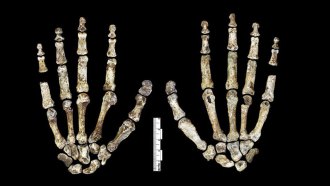
Scientists Say: Hominid
Scientists are still working out what counts as a hominid. Some say it’s just people and our extinct ancestors. Others say add more apes.
- Animals
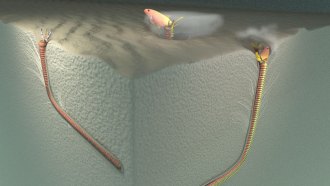
Giant worms may have hidden beneath the ancient seafloor to ambush prey
Twenty-million-year-old tunnels unearthed in Taiwan may have been home to creatures similar to today’s monstrous bobbit worms.
- Animals
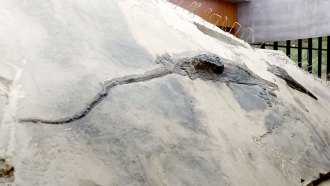
This ancient reptile’s last meal may have truly been a killer
An ichthyosaur’s eyes were too big for its stomach. And that may have led to this ancient reptile’s death.
- Animals
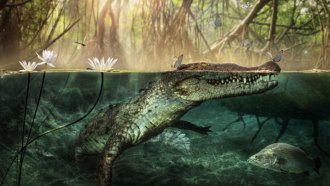
American crocs seem to descend from kin that crossed the Atlantic
A fossil hints that early crocodiles crossed over from Africa, millions of years ago, to colonize a new land.
- Archaeology
Let’s learn about early humans
Homo sapiens are the last member left of our genus. But many other species of early humans existed before us.
- Chemistry
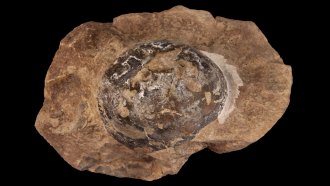
Early dinosaurs may have laid soft-shelled eggs
Scientists for the first time have turned up evidence of fossils from soft-shelled dinosaur eggs. This has scientists rethinking how dinosaur eggs evolved.
- Fossils
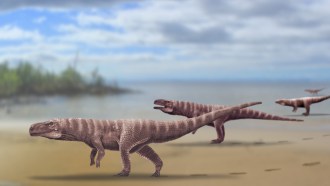
These crocodile ancestors lived a two-legged life
A set of 106-million year old footprints show a crocodile relative appears to have walked on two legs.