Life
- Animals
This frog is the world’s smallest known vertebrate
Neither fleas nor toads, Brazilian flea toads are almost flea-sized. These mini frogs are small enough to fit on a pinkie fingernail.
- Animals
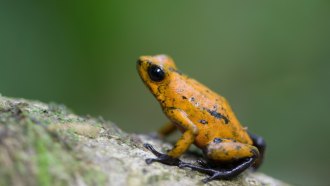
At last: How poison dart frogs ship defense toxins to their skin
A liver protein appears to help the amphibians collect and move toxins from their food to their skin. Those toxins can defend the frogs from predators.
- Brain
Handwriting may boost brain connections that aid memory
Writing with a pen — but not typing — boosted links between regions used for motion and memory. That may help explain why writing fosters learning.
- Animals
Experiment: Are we there yet? Test how migratory birds navigate
In this experiment, use real data to figure out how migratory birds navigate from their breeding grounds to their wintering grounds.
- Health & Medicine
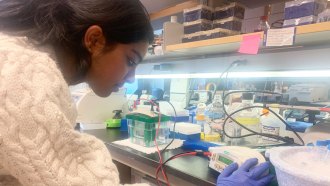
Family, friends and community inspired these high school scientists
When looking for research ideas, listen to the people around you. What problems are they facing? What could you do to help?
- Microbes
Let’s learn about useful bacteria
Bacteria do many useful jobs almost everywhere on Earth, from the soil to the seafloor to our stomachs.
- Animals
Scientists still aren’t always sure why dogs wag their tails
Your dog is wagging its tail. That must mean it’s happy, right? Maybe not. Scientists know less about what’s behind this behavior than you might think.
- Brain
Scientists Say: Confirmation Bias
Confirmation bias is the tendency to seek out and believe information that agrees with what we already think.
- Plants
To spy this palm’s blooms and fruits, start digging underground
Plants across 33 families are known for subterranean flowering or fruiting. But this palm is extremely rare. It does both.
- Physics
Here’s why blueberries aren’t blue — but appear to be
Blueberries actually have dark red pigments — no blue ones — in their skin. Tiny structures in the fruits’ waxy coat are what make them seem blue.
- Animals
Here’s why thousands of octopuses gather at the ‘Octopus Garden’
Underwater cameras and other instruments investigated why so many pearl octopuses gather here to mate and nest.
- Life
Bacterial fossils exhibit earliest hints of photosynthesis
Microscopic fossils from Australia suggest that some bacteria evolved structures for oxygen-producing photosynthesis by 1.78 billion years ago.