Life
- Chemistry
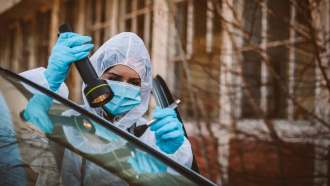
Forensic scientists are gaining an edge on crime
Advances in forensic science are helping to recover invisible fingerprints and identify missing people from bits of tissue or bone.
- Animals
Study finds big drop in animal populations since 1970
But the same thing is not happening throughout the kingdom. For instance, more than half of vertebrate populations are stable or increasing.
- Health & Medicine
Scientists Say: Infection
Infections range from mild illnesses, such as the common cold, to deadly diseases, such as rabies.
- Animals
Some young fruit flies’ eyeballs literally pop out of their heads
The first published photo shoot of developing Pelmatops flies shows how their eyes rise on gangly stalks in the first hour of adulthood.
- Animals
Cougars pushed out by wildfires took more risks around roads
After an intense burn in 2018 in California, big cats in the region crossed roads more often. That put them at higher risk of becoming roadkill.
- Brain
Let’s learn about creativity
By reading brain scans and eavesdropping on brainwaves, scientists are learning more about how creativity works.
- Fossils
Sprinting reptiles may have been forerunners of soaring pterosaurs
A new analysis of an old fossil supports the idea that winged pterosaurs evolved from swift and tiny two-legged ancestors.
- Animals
Splatoon characters’ ink ammo was inspired by real octopuses and squid
In Nintendo’s Splatoon game series, Inklings and Octolings duke it out with weapons that fire ink. How does this ink compare with that of real octopuses and squid?
- Animals
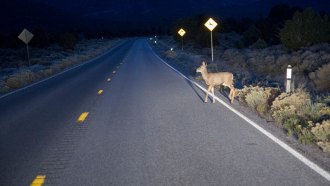
Cars hit more deer in the week after daylight saving time ends
In the days right after most Americans turn back the clock, vehicle crashes with deer increase by 16 percent, a new study shows.
- Chemistry
Scientists Say: Fluorescence
This property causes materials — including some animals’ skin, fur or feathers — to glow under light.
- Environment
Bacterial ‘living wires’ could help protect the seas and climate
Long, thin bacteria that conduct electricity may be able to help clean up oil spills and reduce emissions of methane, a powerful greenhouse gas.
- Agriculture
Let’s learn about eating bugs
Eating more insects, rather than pork, beef or other kinds of meat, may be better for the planet.