Life
- Animals
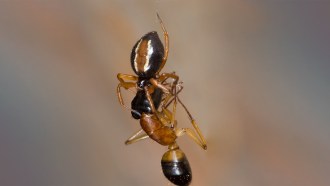
This acrobatic spider flips for its food — literally
An acrobatic hunting trick lets the Australian ant-slayer spider catch prey twice its size, a new study shows.
- Life
Let’s learn about modern Frankensteins
Modern scientists are creating strange new combinations of living tissue and trying to give dead things new life.
- Animals
Award-winning photo captures ‘zombie’ fungus erupting from a fly
The winner of the 2022 BMC Ecology and Evolution photo competition captures the cycle of life and death in the Amazon rainforest in Peru.
- Genetics
For some kids, their rock-star hair comes naturally
A variant of a gene involved in hair-shaft formation was linked to most of the uncombable-hair-syndrome cases analyzed in a recent study.
- Animals
Science is just starting to understand what animals feel
Animal-welfare researchers are studying the feelings and experiences of horses, octopuses and more.
- Genetics
Examining Neandertal and Denisovan DNA wins a 2022 Nobel Prize
Svante Pääbo figured out how to examine the genetic material from these hominid ‘cousins’ of modern humans.
- Animals
Watch: This red fox is the first spotted fishing for its food
Big fish in shallow water were easy pickings for this red fox. It’s the first of its species known to fish.
- Animals
Living mysteries: This critter has 38 times more DNA than you do
The genomes of salamanders are bloated with genetic “parasites.” That extra DNA slows down their lives and strands them in perpetual childhood.
- Animals
Several mammals use a South American tree as their pharmacy
Researchers in Brazil’s Atlantic Forest stumbled onto something very strange. They watched as animals “doctored” themselves with products from a tree.
- Animals
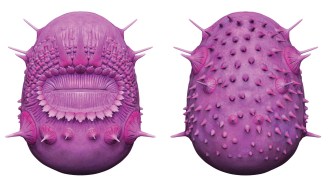
Bizarre ancient critter has spines but no anus
The spiny discovery moves this minion lookalike off a distant limb on the human family tree.
- Animals
Some ecologists value parasites — and now want a plan to save them
Parasites get a bad rap as disease-causing, unwelcome guests on other organisms. But parasites are also imperiled, and scientists don’t want to lose them.
- Animals
Analyze This: Bulky plesiosaurs may not have been bad swimmers after all
Long-necked plesiosaurs were thought to be slow swimmers. But new research suggests the animals’ large size helped them overcome water resistance.