Tech
- Climate
Cool Jobs: Head in the clouds
What do a microbiologist, an atmospheric scientist and a materials engineer have in common? They’ve all got their heads in the clouds.
- Health & Medicine
Star Trek gets closer to becoming home tech
Inspired by Star Trek, inventors have created handheld devices to diagnose common medical ailments.
- Tech
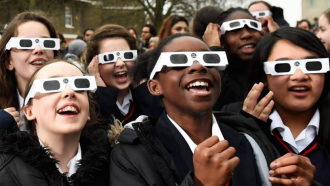
How to safely watch a solar eclipse
Certified safety glasses are a must for protecting your eyes when looking at the sun. Here’s how to safely enjoy a solar eclipse, like the one on August 21, 2017.
- Life
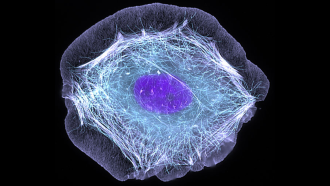
‘Nanostraws’ safely sneak a peek inside cells
Scientists have developed tiny straws that let them peek inside a living cell without killing it or even damaging it.
- Computing
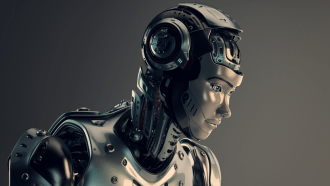
Teaching robots right from wrong
Robots of the future will face tricky dilemmas. Researchers are working on tools to help robots make the right choices and keep people safe.
- Psychology
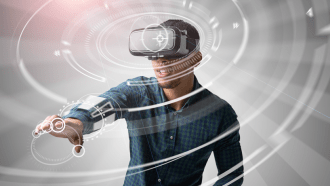
Cool Jobs: Doing real science in virtual worlds
Virtual reality isn’t just for gamers. Scientists are using VR technology to tackle real-world problems.
- Life
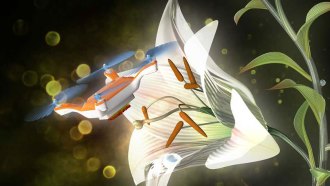
Fleets of flying robots could pollinate crops
Tiny flying drones use patches of sticky hair to capture pollen. One day they might join bees in pollinating crops.
- Computing
Single atoms become teensy data storage devices
Most people consider a thumb drive to be an amazingly small device for storing data. But this new system uses a ten-thousandth the number of atoms of today’s data-storage devices.
- Physics
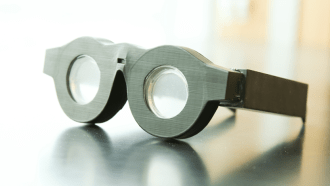
Auto-focus eyeglasses rely on liquid lenses
Engineers have designed what could be the last eyeglasses anyone would need. Right now, they’re bulky but smart. Liquid lenses are key to their adjustability — and those lenses focus automatically.
- Physics
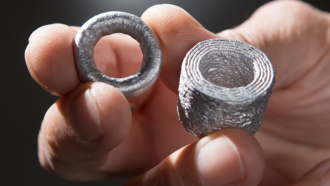
Father and son harness magnetic fields for new type of 3-D printing
A dad and his son have developed a new 3-D printing method in their basement. It harnesses pulsed magnetic fields to build metal objects one tiny aluminum drop at a time.
- Animals
Cool Jobs: A world aglow
Three scientists probe how the natural world makes light, in hopes of using this information to design new and better products.
- Tech
Scientists turn toy into valuable tool for medical diagnosis
A human-powered ‘paperfuge,’ inspired by a toy, could serve as an easy, low-cost way to aid in medical diagnoses, even in regions of the world lacking access to electricity.