All Stories
- Fossils
T. rex may have hidden its teeth behind lips
Dinosaurs like Tyrannosaurus have long been portrayed with their big teeth bared. But new research suggests this wasn’t so.
- Math
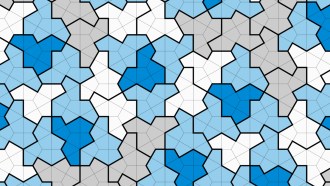
An ‘einstein’ shape eluded mathematicians for 50 years. Now they found one
The shapes can form an infinite tiled pattern that never repeats. The first is a 13-sided shape nicknamed “the hat.”
- Space
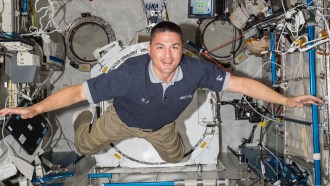
This astronaut took a winding journey into space
Astronaut Kjell Lindgren has flown into space twice and performed more than 100 scientific experiments. He is now part of the crew planning a return to the moon.
- Physics
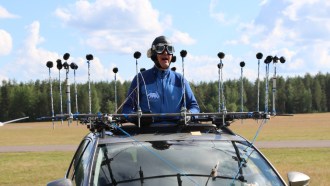
Shouting into the wind may seem futile — but it’s really not
Sending a sound upwind, against the flow of air, actually makes the sound louder — only it doesn’t sound that way to the person making the noise.
- Space
Fairy tale inspiration could help rovers explore risky places
Taking a cue from Hansel and Gretel, scientists propose a way for rovers to send back data from treacherous terrain.
- Physics
Scientists Say: Explosion
Explosions happen when chemical or nuclear reactions blow out a lot of heat, noise and expanding gas.
- Materials Science
Analyze This: A new fabric mimics polar bears’ pelts for warmth
With layers that work like polar bears’ skin and fur, a material absorbs light and keeps it from escaping.
- Psychology
Done right, online learning might be as engaging as face-to-face
Measures of stress offer clues to how engaged students are during online lessons. This could help teachers design more effective classes.
- Planets
In a first, telescopes have caught a star eating a planet
A burst of light and a cloud of dust are signs that a distant star swallowed a giant planet.
- Plants
Could a plant ever eat a person?
For now, humans aren’t on the menu for carnivorous plants. But what would it take for one to consume a person?
- Environment
Fungi help rescue crops being harmed by microplastics
Microplastics in the soil hinder plant growth. But two finalists at Regeneron ISEF found that fungi and farm waste can reduce the harm.
- Brain
Scientists Say: Addiction
Recovering from addiction is hard but possible. Encouragement of loved ones can improve a person’s chances of overcoming this disease.