Orange cats get their ginger color from a single gene ‘cutout’
Multicolored cats, such as calicos and tortoiseshells, also carry this DNA deletion
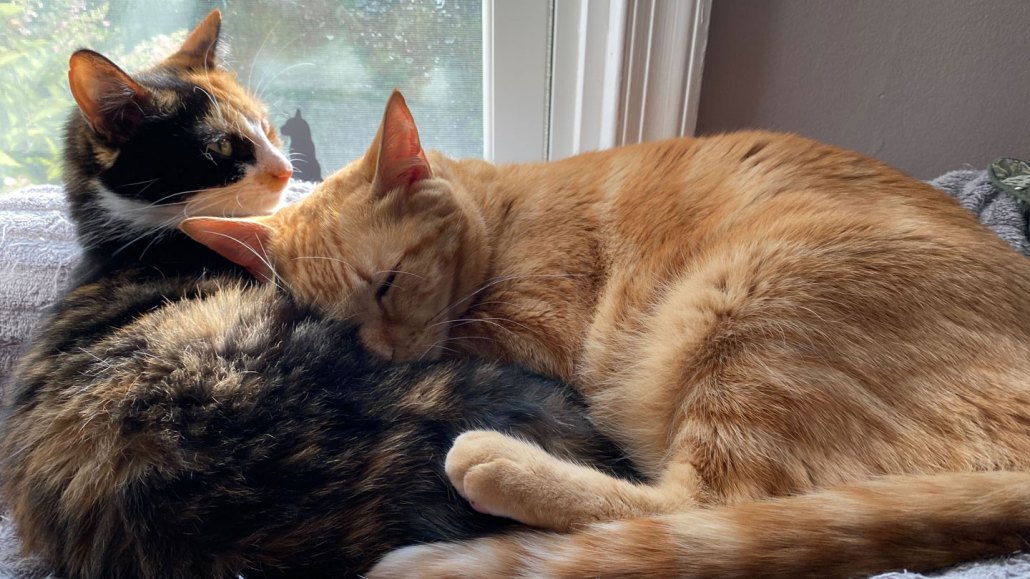
A DNA deletion on the X chromosome of domestic cats leads to ginger-colored fur, two new studies show. Cats with multicolor coats, like calicos and tortoiseshells, also have the mutation. Both Oscar (orange cat, right) and Alani (calico cat, left) likely have the mutation.
S. Zielinski
Cats come in many colors and patterns. And bright orange is one of the most striking. The mystery of what gene gives ginger cats their hue has stumped scientists for decades. Now, two different teams have just turned up the same solution.
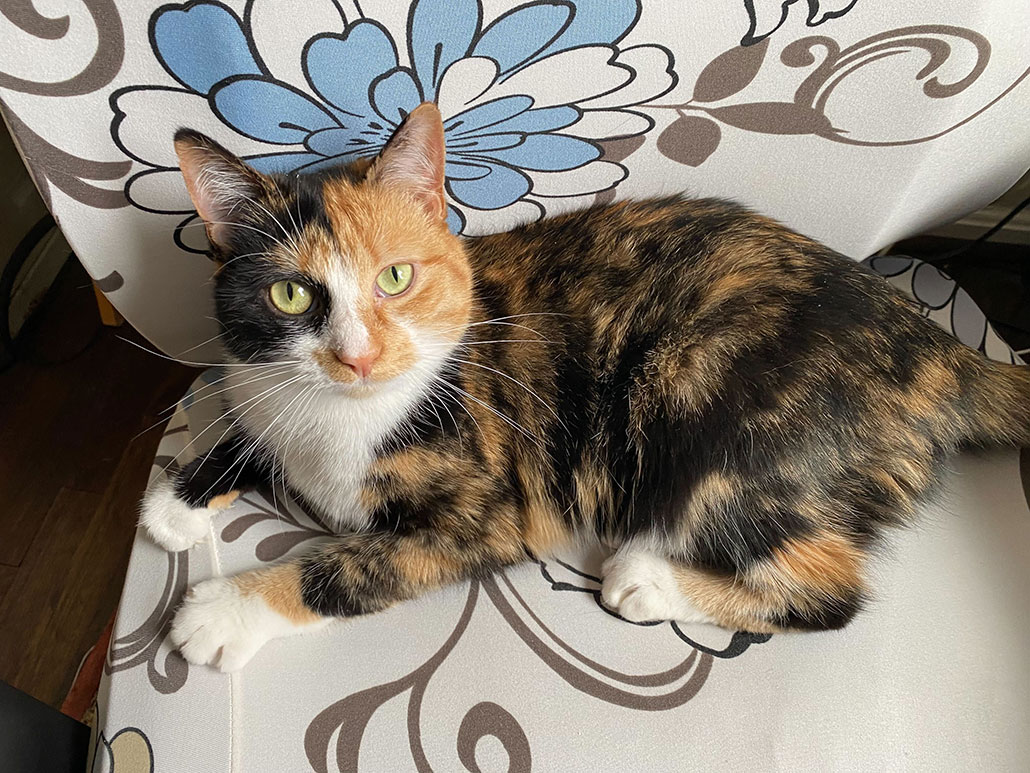
Most kitties with orange fur share the same cutout in their DNA, the new research shows. Even multicolored cats with a few ginger patches — such as calicos and tortoiseshells — have this mutation. The DNA deletion makes cells in cats’ hair-growing structures produce a yellow-red pigment instead of the default brown-black hue.
Both teams published their studies in the June 23 issue of Current Biology.
“X” marks the spot
Researchers knew the bit of DNA, or gene, linked to ginger fur lay in a DNA bundle called the X chromosome. Here’s how.
In cats and most other mammals, males usually have one X and one Y chromosome. Females typically have two X chromosomes. As a result, the single X chromosome is very active in all cells of a male cat. But only one of the two X chromosomes is active in each cell of a female cat.
If the ginger fur gene were on the X chromosome, then male cats with that trait would be completely orange. But in a female cat, both X chromosomes would need to carry the orange trait for her to be fully ginger. If only one X chromosome contained the trait, then her coat would likely become a patchwork of orange and black.
Indeed, that is the color pattern seen among cats. Most completely orange cats are male. Most multicolored cats, meanwhile, are female.
Most other mammal species don’t get ginger hair based on their sex. Not even famously orange big cats (such as tigers) do. So domestic cats possess an unusual mutation, says Chris Kaelin. He studies genetics at Stanford University in California.
DNA examination
Kaelin was part of a team that examined the genes of about 30 cats. They hoped to find DNA features shared only by those with orange fur. Their work revealed a deleted stretch of about 5,000 DNA base pairs near a gene called Arhgap36. (The cat genome has about 2.7 billion base pairs total.) The removed bit was not in the gene itself, but close enough to affect its activity.
The Arhgap36 gene carries instructions for making a certain protein. The nearby deletion boosted how much of that protein it makes — but only in cells that make pigment. (Pigments are chemicals that impart color.)
In pigment-making cells, the protein stops genes needed to make the brown-black pigment from turning on. Instead, a yellow-red pigment is produced. It involves fewer genes, so it’s easier to make, explains Greg Barsh. He’s also a geneticist at Stanford University. (Mammals produce only two pigments. Different shades come from other genetic factors.)
A team in Japan identified the same deletion. This team examined DNA from almost 60 cats. When lots of Arhgap36 protein is made, the genes that make the brown-black pigment become less active, explains Hiroyuki Sasaki. He’s a geneticist at Kyushu University.
His team also found that all orange cats from a global database of 258 kitties had the same deletion. Non-orange ones lacked it. Sasaki suspects the trait was passed down from one ancestral cat. That cat lived more than 900 years ago, suggest Kaelin, Barsh and their team-mates. They base this estimate on historical paintings of calicos.
Before these studies, researchers didn’t know Arhgap36 was involved with a cat’s coloring. It’s mostly active in certain hormone-producing organs, such as the pituitary gland. The gene’s role in ginger hues is unique to domesticated felines.