Let’s learn about hydrogels
These polymer-based materials have an astonishing array of uses
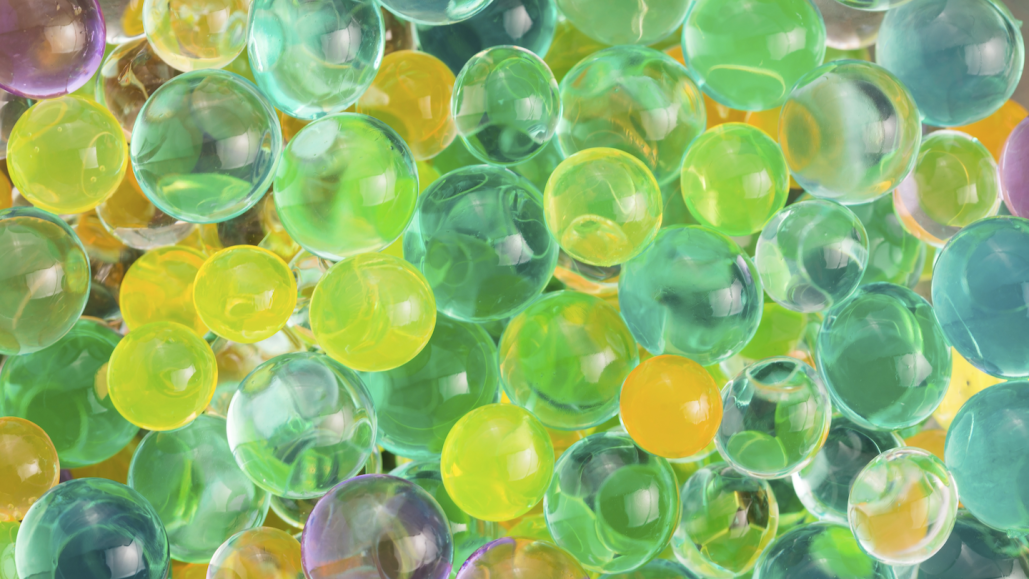
Hydrogels are polymer-based materials sop up water like sponges — and can later release it for a variety of uses.
imageBROKER/Joanna Wnuk/Getty Images
Share this:
- Share via email (Opens in new window) Email
- Share on Facebook (Opens in new window) Facebook
- Share on X (Opens in new window) X
- Share on Pinterest (Opens in new window) Pinterest
- Share on Reddit (Opens in new window) Reddit
- Share to Google Classroom (Opens in new window) Google Classroom
- Print (Opens in new window) Print
What do Jell-O, contact lenses and 3-D printed body parts have in common?
They all rely on hydrogels.
Hydrogels are polymer-based materials that can absorb and release lots of water. These materials are composed of threadlike molecules tangled in a complex mesh. That netting easily snags water, or H2O, molecules.
Some hydrogels are made of natural polymers. Jell-O is a good example. It contains a natural polymer called gelatin. Other hydrogels are made with synthetic polymers — and can be put to work in many different ways.
Some hydrogels can suck moisture out of the air and release it for drinking water. Others can collect H2O from dirty water while leaving pollutants behind. Hydrogels can even be added to soil. When someone waters their crops, those hydrogels soak up the moisture and release it slowly. That keeps water from flowing or evaporating off the soil.
Hydrogels are especially useful for making stuff that must touch living tissue. That’s because hydrogels and living tissue are both mostly water. Hydrogels have been used to make contact lenses and medical implants. Some engineers have also used hydrogels to 3-D print human tissues for transplants. The bioinks used to print these tissues mix live cells with a hydrogel ooze that protects the cells.
Want to know more? We’ve got some stories to get you started:
A new hydrogel could help pull drinking water from the air The salty gel absorbs more water from the air than similar gels, even in desert climates. This could provide clean water for drinking or farming. (11/3/2023) Readability: 6.8
A new solar-powered gel purifies water in a flash The unusual, fruit-inspired structure of this material provides quick filtration that could satisfy people’s daily water needs. (4/8/2023) Readability: 6.9
New patch might replace some finger-prick testing of blood sugar One teen’s hydrogel-based device tests glucose in sweat to signal when insulin is needed. (5.18/2023) Readability: 8.0
Explore more
Explainer: What is a hydrogel?
Explainer: What is bioprinting?
This teen materials scientist wants to save the Great Salt Lake
Zap, zap, zap! Our bodies are electric
This sun-powered system delivers energy as it pulls water from the air
Could reusable ‘jelly ice’ cubes replace regular ice?
Activities
If you’ve got a green thumb, try this experiment from Science Buddies and test how well hydrogels help conserve water in farming. Prefer to take a spa day? Science Buddies has another hydrogel experiment for you — testing the moisturizing power of hydrogel face masks.