HS-LS2-1
Use mathematical and/or computational representations to support explanations of factors that affect carrying capacity of ecosystems at different scales.
- Animals
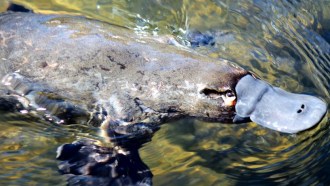
Taking attendance with eDNA
Environmental DNA, or eDNA, tells biologists what species are in an area — even when they’re out of sight.
- Animals
Wildlife forensics turns to eDNA
Environmental DNA, or eDNA, tells biologists what species have been around — even when they’re out of sight or have temporarily moved on.
- Animals
News Brief: Bees prefer caffeine-spiked nectar
Bees usually alert friends to sources of especially sweet nectar. But a new study finds caffeine is every bit as appealing to them as the sugar is. And that could compromise the quality of their honey.
- Animals
Humans are ‘superpredators’
A new study compares the hunting habits of wild animals and humans. People, it turns out, are unlike any other predator on Earth.
- Agriculture
Organic food starts to prove its worth
Organic food often comes with a higher price. But research is showing that food grown this way can be better for the environment — and possibly for us.
- Animals
The bugs within us
Hordes of bacteria live inside people and other animals. This ‘microbiome’ can affect the development of the blood-brain barrier, food choices — even mating.
- Animals
Return of the bed bug
Bed bugs have staged a comeback over the past 15 years. The bloodsucking parasites succeeded through a combination of evolution and luck.
- Earth
Deep-sea fish show signs of exposure to pollution
A new study suggests deep-water fish may have health problems linked to human pollution. Eating these fish may expose diners to the same pollution.
- Microbes
Making a microbe subway map
We are surrounded by bacteria, fungi and other tiny organisms. Now, high school scientists have contributed to the first map of microbes in the New York subway system.
- Animals
Cats and foxes are eating up Australia’s mammals
Since the arrival of Europeans in Australia, a startling number of mammal species have disappeared. A new study puts much of the blame on cats and foxes introduced by the early settlers.
- Animals
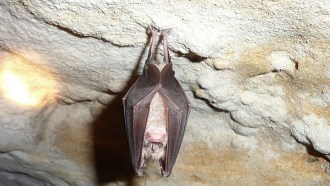
Scientists seek bat detectives
Bats emit high-pitched calls in the night to find their way around. A citizen science project is eavesdropping on these calls to probe the health of ecosystems.
- Animals
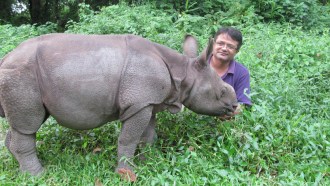
Rare as a rhino
Most species are rare. Some have always been rare. A problem develops when people are responsible for accelerating a species’ rarity to the point that extinction threatens.