HS-LS2-2
Use mathematical representations to support and revise explanations based on evidence about factors affecting biodiversity and populations in ecosystems of different scales.
- Health & Medicine
Explainer: What is a vaccine?
Vaccines give the body’s natural defense system a boost against infectious disease.
- Climate
Hunting the mysterious source of a global illness
Doctors and scientists around the world are scouring the environment for the elusive cause of Kawasaki disease, a harmful childhood illness.
- Ecosystems
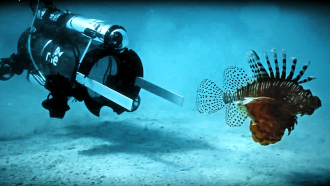
Camera catches new fish species — as it’s eaten!
A video of a lionfish eating a new-found species of fish raises concerns about the threat lionfish pose to undiscovered species in deep reefs.
- Animals
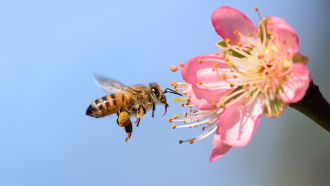
Popular pesticide may harm bee flight
In a lab experiment, honeybees flew sluggishly after eating pesticide-tainted food.
- Chemistry
New rules point scientists toward next-gen germ-killers
Shape and other features help germ-killing drugs make it through barriers to enter bacteria. Knowing how they do this could lead to more and better better antibiotics.
- Genetics
Cool Jobs: New tools to solve crimes
Future investigators may identify criminals by the microbes they leave behind or by using DNA-like evidence from strands of their hair.
- Animals
Underwater robot vacuums up lionfish
Lionfish damage coral reefs in the Atlantic Ocean. A new underwater robot hunts, stuns and captures the bullies with help from a human operator.
- Health & Medicine
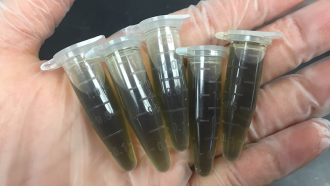
Plant extract mutes germs to fight infections
A plant extract prevents the aggressive behavior seen in some germs. Using it could fight the development of most bladder infections, a teen’s research suggests.
- Animals
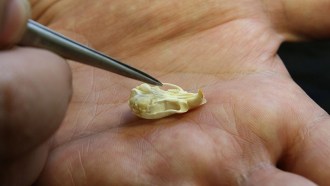
How the house mouse found its home
Once people started settling down 15,000 years ago, a mouse species followed them indoors. The animals didn’t need people to be farming and storing food.
- Health & Medicine
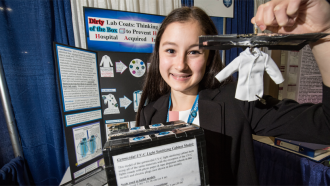
A light-filled box could blast bacteria from lab coats
Doctors can pick up bacteria on their lab coats. A teen has designed a special light-filled box to keep those coats from infecting others with those germs.
- Animals
These killer whales exhale sickening germs
A group of endangered killer whales are exhaling disease-causing germs. Researchers worry these microbes could make the animals sick.
- Ecosystems
Cities drive animals and plants to evolve
Biologists are finding that some species have used genetic changes to evolve — adapt — to the pollution and other stressors that they encounter in cities.