MS-LS1-2
Develop and use a model to describe the function of a cell as a whole and ways parts of cells contribute to the function.
- Brain
A taste map in the brain is a scattering of tiny flavor islands
Some senses are highly organized in the brain. Taste is not. And that points to just how important it is.
- Animals
Touching allows octopuses to pre-taste their food
Special sensory cells in their arms’ suckers sense chemicals. Those cells allow them to taste the difference between food and poison.
- Brain
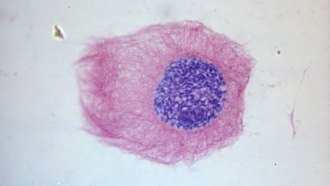
Scientists Say: Nucleus
Nucleus comes from the Latin term “nuc,” meaning nut or kernel. In science there are lots of nuclei. Every one of them is the center of something.
- Animals
When physicians and veterinarians team up, all species benefit
When doctors for people and those for animals share their expertise, they can discover new ways to take better medical care of all species.
- Genetics
Gene editing can alter body fat and may fight diabetes
Researchers have long dreamed of using brown fat to fight obesity and diabetes. Work in animals shows they’re closing in on achieving that dream.
- Health & Medicine
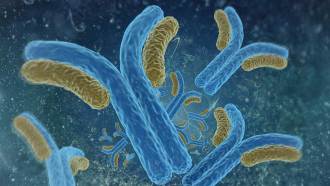
A glowing new way to measure antibodies
Researchers invent a way to detect and measure antibodies with glowing proteins. Antibodies can mark exposure to various diseases.
- Animals
Superblack fish can disappear in the deep sea’s darkness
Some fish that live in the ocean’s depths are superblack due to a special layer of light-absorbing structures in their skin.
- Brain
Can we taste fat? The brain thinks so
Scientists had not considered fat a 'taste.' The brain begs to differ, new data show.
- Health & Medicine
Explainer: What are Antibodies?
Antibodies are one of the major players in the immune system’s attack against germs. Learn what they are, what they do and how they keep us healthy.
- Genetics
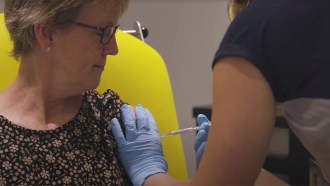
New COVID-19 vaccines show promise in people
Early data from human trials show that several candidate COVID-19 vaccines produce virus-inactivating antibodies and immune cells that fight the virus.
- Health & Medicine
Remdesivir is looking even better at fighting COVID-19
New studies suggest the drug remdesivir not only speeds recovery of COVID-19 patients in the hospital, but lowers their risk of death from the virus.
- Brain
Explainer: How our eyes make sense of light
It takes a lot for images before the eyes to be 'seen.' It starts by special cells sensing the light, then signals relaying those data to the brain.