MS-LS2-2
Construct an explanation that predicts patterns of interactions among organisms across multiple ecosystems.
- Animals
When physicians and veterinarians team up, all species benefit
When doctors for people and those for animals share their expertise, they can discover new ways to take better medical care of all species.
- Agriculture
Learning what stresses queen bees could save their hives
Beehives often die off after the queen gets too stressed to make enough babies. New tests could identify what stressed her — and point to solutions.
- Animals
Here’s what bats ‘see’ when they explore the world with sound
High-speed cameras, fancy microphones and slick software are helping scientists get the best look yet at what bats perceive through echolocation.
- Climate
The faster trees grow, the younger they die
As climate change spurs forest tree growth, it also shortens trees’ lives. That results in a quicker release of climate-warming carbon back into the atmosphere.
- Animals
Whales get a second life as deep-sea buffets
When a whale dies and sinks to the seafloor, it becomes a feast for hundreds of different types of creatures.
- Animals
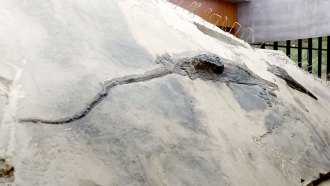
This ancient reptile’s last meal may have truly been a killer
An ichthyosaur’s eyes were too big for its stomach. And that may have led to this ancient reptile’s death.
- Health & Medicine
Trio wins 2020 Nobel for discovery of hepatitis C
It took 50 years from discovery of hepatitis C to its cure. For their pivotal work in this area, three men will take home a 2020 Nobel Prize.
- Animals
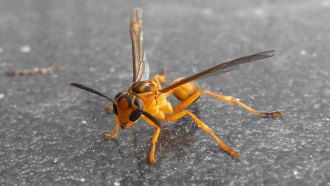
A wasp nibbled a baby bird for breakfast
Scientists found an injured baby bird in a nest they were studying. The culprit wasn’t another bird or a reptile. It was a wasp.
- Health & Medicine
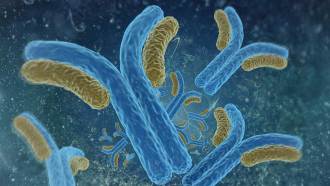
A glowing new way to measure antibodies
Researchers invent a way to detect and measure antibodies with glowing proteins. Antibodies can mark exposure to various diseases.
- Animals
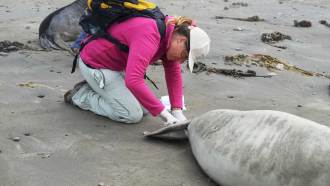
One tiny sea parasite survives 200 times atmospheric pressure
Known as the seal louse, this tiny insect can survive deep oceanic dives on its mobile home, a marine mammal.
-
A dirty and growing problem: Too few toilets
As the famous book says, everybody poops. That’s 7.8 billion people, worldwide. For the 2.4 billion with no toilet, the process can be complicated.
- Ecosystems
Soggy coastal soils? Here’s why ecologists love them
Coastal wetlands can protect our shores from erosion, flooding and rising sea levels.