MS-LS4-2
Apply scientific ideas to construct an explanation for the anatomical similarities and differences among modern organisms and between modern and fossil organisms to infer evolutionary relationships.
- Fossils
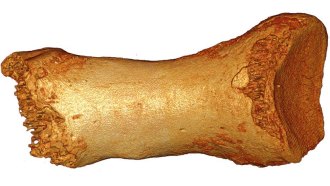
Neandertal toe contains human DNA
DNA from a 50,000-year-old Neandertal woman’s toe bone shows humans left a mark on the ancient species — and much earlier than scientists had thought.
- Fossils
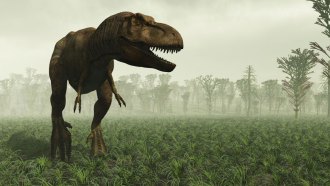
Predatory dinos were truly big-mouths
Large meat-eating dinosaurs could open their mouths wide to grab big prey. Vegetarians would have had a more limited gape, a new study suggests.
- Genetics
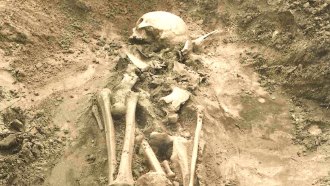
The earliest evidence of plague
Plague is best known as the killer disease that wiped out nearly half of Europe during the 1300s. But the germ infected people up to 3,000 years earlier than that, DNA from ancient teeth now show.
- Animals
Picture This: The real ‘early bird’
Long before dinosaurs went extinct, birds were emerging on Earth. These hummingbird-size wading birds are the earliest known ancestors of today’s birds.
- Fossils
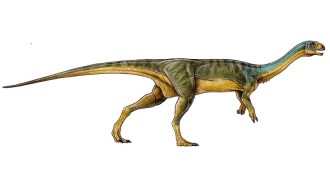
‘Frankenstein’ dino showed a mashup of traits
New species unearthed in Chile is “an anatomical Frankenstein,” declares one of its discoverers.
- Animals
Scientists Say: Nematode
Nematodes are a group of related small worms found all over the world. They can cause disease, but they also can be useful for scientists to study.
- Animals
Bird DNA leads to strange family tree
Field guides often group birds together by similarities in appearance or behavior. But a new study, based on DNA, confirms earlier suspicions that such groupings are only skin-deep.
- Animals
Tar pit clues provide ice age news
New analyses of insects and mammals trapped in the La Brea Tar Pits point to climate surprises during the last ice age.
- Fossils
Dinos ‘quickly’ shrunk into birds
Scientists had long known birds descended from dinosaurs. A study now shows that the morphing from dinos into birds went along with a quick and steady shrinking of their body sizes.
- Fossils
Some Arctic dinos lived in herds
Fossil footprints retrieved from Alaska indicate that plant-eating duckbill dinos not only traveled as extended families but also spent their entire lives in the Arctic.
- Fossils
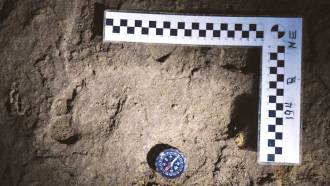
Newly dated footprints: Oldest human tracks?
These footprints, found nearly a half-century ago, may be almost four times older than first thought, scientists now report.
- Fossils
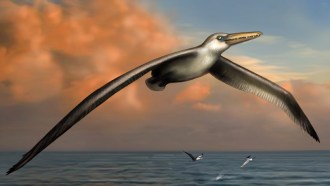
Mega-bird!
What may have been the bird world’s biggest flier ever had wings so long, they would have had trouble flapping fast enough to keep it aloft in tough winds. But this behemoth would have been able to soar both far and fast.