MS-PS1-4
Develop a model that predicts and describes changes in particle motion, temperature, and state of a pure substance when thermal energy is added or removed.
- Chemistry
Scientists Say: Aerosol
Aerosols are tiny bits of solids or drops of liquids suspended in gas. Aerosols include mist, fog and soot, as well as pollution from fossil fuels.
- Materials Science
Take a look at this weird, bendy type of ice
These specially grown threads of ice bend into curves, then spring back when released.
- Physics
Nuclear clocks are nearly here
More precise clocks could improve technologies such as GPS and help scientists test major ideas in science.
- Chemistry
Extreme pressure? Diamonds can take it
Diamond retains its structure even at extreme pressures, which could reveal how carbon behaves in the cores of some exoplanets.
- Chemistry
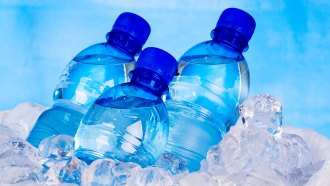
Build ice towers with bottled water and ice
Pour out liquid water into a solid ice tower. We outline the conditions you’ll need to turn this demonstration into a super-cool experiment.
- Physics
Physicists foil classic oobleck science trick
Cornstarch and water — best known as oobleck — solidifies upon impact. Researchers used a new technique to make it stay liquid.
- Climate
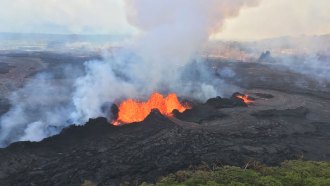
Did rain put the Kilauea volcano’s lava-making into overdrive?
Scientists share strongly conflicting opinions about why Hawaii’s Kilauea volcano spewed an overabundance of lava in 2018.
- Chemistry
Converting trash to valuable graphene in a flash
Flash heating of carbon-rich wastes creates graphene, which has many commercial uses.
- Physics
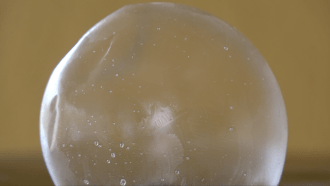
How to temporarily ‘fossilize’ a soap bubble
Here’s how to freeze a soap bubble in midair. Warning: The environment needs to be frosty, and even then it can take a certain amount of trial and error.
- Chemistry
Banana plant extract can slow how fast ice cream melts
Food scientists now show that adding these tiny plant particles to ice cream may delay the rate at which this treat melts into a soupy mess.
- Climate
Ancient Arctic ‘gas’ melt triggered enormous seafloor explosions
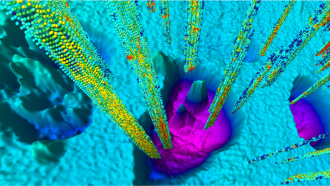
Methane explosions 12,000 years ago left huge craters in bedrock on the Arctic seafloor. Scientists worry more could be on the way today as Earth’s ice sheets melt.
- Health & Medicine
Adding ice to medics’ kits could help patients survive blood loss
Placing an ice bag on the face should increase blood pressure — and oxygen to the brain — in people who have experienced life-threatening blood loss, a new study finds.