Waves and Their Applications in Technologies for Information Transfer
- Tech
Nanobots can now enter brain cells to spy on what they’re doing
Fleets of advanced versions may one day be able to detect disease and then go about surgically treating it — without ever opening the skull.
- Tech
Scientists Say: Fiber optic cable
Whether you’re reading these words on a phone, computer or other device, you may have fiber optic cables to thank.
- Tech
Gravity ‘batteries’ might help a weighty renewable-energy problem
To store the energy generated by wind and solar power, researchers are looking at mammoth systems that raise and lower weights.
- Physics
Scientists Say: Radio Waves
Lightning, stars, supermassive black holes and more give off radio waves.
- Oceans
How would a mermaid sound underwater?
Human ears don’t work well in the water. A mermaid would need marine creature features to talk to and understand her aquatic friends.
- Plants
A single particle of light can kick off photosynthesis
In a new experiment with bacteria, a lone photon sparked the process of turning light to chemical energy.
- Physics
Shouting into the wind may seem futile — but it’s really not
Sending a sound upwind, against the flow of air, actually makes the sound louder — only it doesn’t sound that way to the person making the noise.
- Materials Science
Analyze This: A new fabric mimics polar bears’ pelts for warmth
With layers that work like polar bears’ skin and fur, a material absorbs light and keeps it from escaping.
- Planets
In a first, telescopes have caught a star eating a planet
A burst of light and a cloud of dust are signs that a distant star swallowed a giant planet.
- Physics
Explainer: Reflection, refraction and the power of lenses
The inner workings of microscopes, telescopes, eyeglasses and other lens-based devices rely on two important laws of optics.
- Tech
Nanocrystal ‘painted’ films may someday help relieve summer heat
The rainbow palette and cooling powers of new plant-based films comes from their microscopic surface patterns of tiny crystals.
- Tech
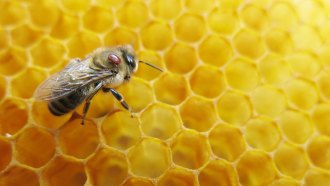
A device spots and counts honeybees hosting a dangerous parasite
At Regeneron ISEF, three teens debuted an infrared system to detect honeybees carrying mites. It can show beekeepers when a colony needs to be treated.