Waves and Their Applications in Technologies for Information Transfer
- Computing
Scientists Say: Artificial intelligence
Artificial intelligence is technology smart enough to do tasks that would normally require human brainpower.
- Tech
Will the internet soon reach the one-third of people without it?
Access to the internet is a human right, yet much of the world can’t get online. New tech has to be affordable and usable to end this digital divide.
- Tech
A tool as small as a human cell can scan for contaminants and more
Tiny spectrometers might someday show up on smart devices. They could help people scan for ingredients or contaminants in foods and other materials.
- Chemistry
Scientists Say: Fluorescence
This property causes materials — including some animals’ skin, fur or feathers — to glow under light.
- Materials Science
These fabrics change color as they stretch
Stretchy, color-shifting cloth may lead to new art, fashions and sensors. A century-old Nobel-prize-winning invention served as its inspiration.
- Planets
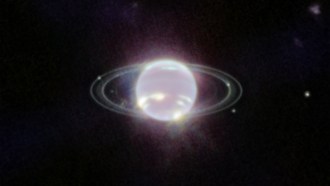
Check out the first direct look at Neptune’s rings since the ’80s
The Voyager 2 spacecraft took the first pics of Neptune’s rings 33 years ago. Now, NASA’s James Webb telescope is providing a more detailed view of them.
- Physics
Cosmic timeline: What’s happened since the Big Bang
Energy, mass and the cosmos' structure evolved a lot over the past 13.82 billion years — much of it within just the first second.
- Space
Scientists Say: Telescope
Almost everything we know about the universe around us, we know thanks to telescopes.
- Earth
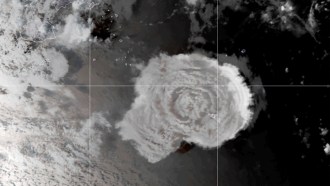
One 2022 tsunami may have been as tall as the Statue of Liberty
A massive volcanic eruption in the South Pacific, earlier this year, appears to have triggered one tsunami that was initially 90 meters (nearly 300 feet) tall.
- Earth
Amateur astronomers reveal clues to a mysterious double aurora
Stunning images from citizen scientists show an unusual pattern in ‘Northern Lights.’ They offer clues that may help astronomers better understand a curious red glow.
- Physics
Explainer: How the Doppler effect shapes waves in motion
The Doppler effect describes how waves are compressed or stretched when their source — or receiver — is moving.
- Chemistry
Scientists Say: Pigment
From fruits to fur to fine art, many materials get their colors from compounds called pigments.