Humans
- Health & Medicine
New ways to fight the flu
Influenza sickens millions each year. A worldwide epidemic could kill many of them. Fortunately, new ways to fight the flu offer hope — before it’s too late.
- Chemistry
News Brief: Common campfire style is still the best
Humans tend to build fires in the same way, in a pyramid as tall as it is wide. New calculations show this shape burns hottest.
- Genetics
A germ stopper for blood products
A new system can disable almost all viruses or bacteria that are lurking in donated blood platelets and plasma.
- Health & Medicine
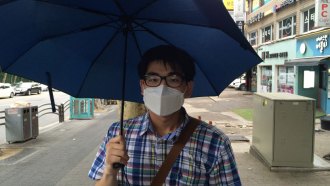
MERS virus hits South Korea hard
MERS — a killer viral disease — emerged for the first time only three years ago. That was in the Middle East. Now it has spread to Asia.
- Earth
Gulf oil spill: Still poisoning dolphins to crickets
Once the 2010 Deepwater Horizon spill ended, oil continued to harm animals in the Gulf of Mexico. Five years later, it still may not be over, biologists worry.
- Genetics
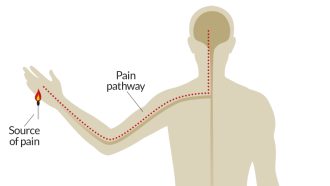
Altered gene leaves people totally painfree
That’s not a good thing for these people. Still, it could lead to a new class of drugs to help people who now suffer from chronic pain.
- Fossils
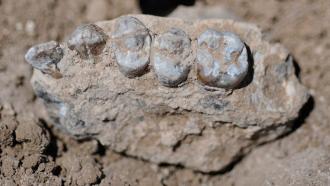
Fossil find adds a relative to our family tree
Lucy is the best known of our early ancestors. Now, a new fossil from Ethiopia suggests a second pre-human species lived alongside her kind.
- Health & Medicine
Vaping may harm the lungs
E-cigarettes are the most widely used tobacco product among U.S. teens. But emerging data suggest vaping can harm the lungs.
- Genetics
Catching ZZZs may retrieve lost memories
Forgetful? Maybe you’ve forgotten to get enough shuteye. A study in fruit flies suggests that a good sleep can boost their ability to remember things.
- Animals
Pesticides offer bees a risky allure
Honeybees and bumblebees sometimes cannot taste or avoid pesticides called neonicotinoids. And that may expose some of these important pollinators to harm.
- Health & Medicine
Teens win big for pollution control and HIV detection
Ah-choo! The 2015 Intel ISEF competition’s top winner designed a way to curb germs on planes. Two other big winners invented ways to detect HIV early and to corral oil spills at sea.
- Health & Medicine
Bones: Custom cushioning helps heal a bad break
If the stiff casts encasing broken limbs included an inflatable air bladder instead of a soft lining, costly and painful complications experienced by some patients during healing might be avoided, two teens reported at the 2015 Intel ISEF competition.