Life
- Climate
‘Watermelon’ snow is helping melt glaciers
Microbes that paint snow pink are accelerating the melting of ice fields in Alaska.
- Brain
Small genetic accident made Zika more dangerous
A new study finds that a tiny mutation made the Zika virus more dangerous, by helping it kill cells in the fetal brain.
- Health & Medicine
Analyze This: Does moderate screen time boost teen happiness?
Computers, smartphones and TVs are everywhere. And scientists are trying to discover whether that’s a good thing for our well-being.
- Animals
Earthworm invaders may be stressing out some maples
Worms are great for soil when ecosystems have evolved with them. But in earthworm-free places, like parts of the U.S. Upper Midwest, they can cause problems for plants and animals.
- Brain
A cell hookup helps the tongue tell sweet from sour
To keep your sense of taste, new taste cells need to hook up to your brain every few weeks. Now, scientists have figured out how they do it.
- Genetics
Explainer: Why scientists sometimes ‘knock out’ genes
How do we learn what a particular molecule does in the body? To find out, scientists often 'knock out' the gene that makes it. Here’s how.
- Brain
Scientists Say: Rabies
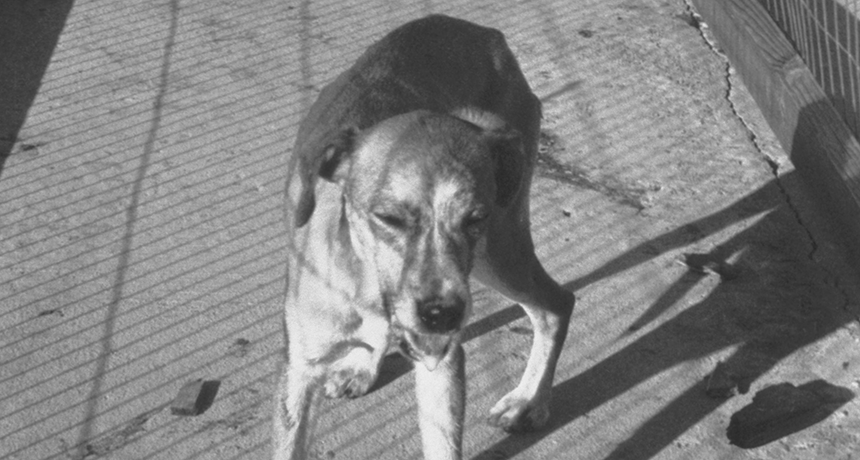
Rabies is a disease caused by the rabies virus. There is a vaccine, but without it, people and animals can die from this disease.
- Genetics
One day, your sunscreen may be made from DNA
A new approach to sunscreen could use a thin layer of DNA to protect skin cells — and hopefully prevent cancer.
- Health & Medicine
Explainer: What is a hormone?
Various tissues secrete special chemicals, known as hormones. They travel, usually in blood, to a particular distant site where they tell certain cells it’s time to go to work.
- Brain
Evening screen time can sabotage sleep
Blue light from electronic devices can impair the body’s ability to sleep, making it hard to focus in the morning.
- Animals
Pumpkin toadlets can’t hear themselves talk
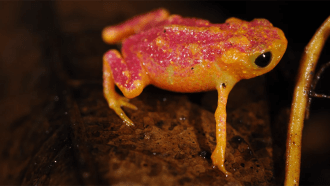
Tiny orange frogs make soft chirping sounds in the forests of Brazil. Their ears, however, cannot hear them, a new study finds.
- Animals
Scientists Say: Vampire
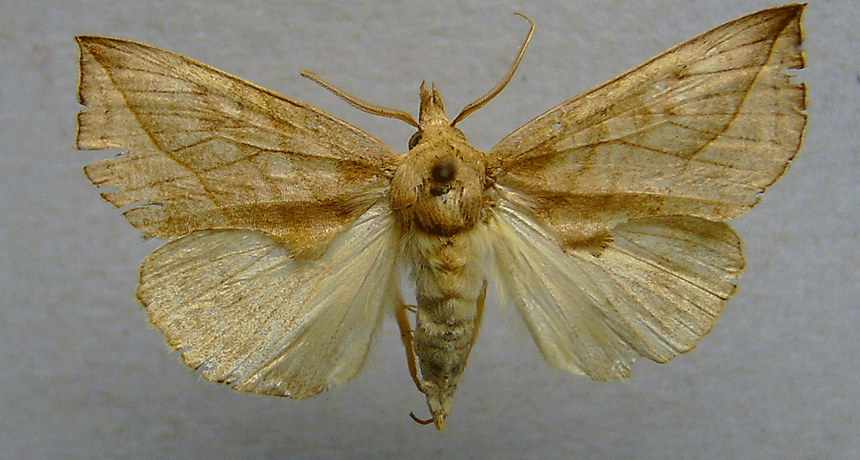
Human vampires are found only in fiction. But vampire bats and moths are the real thing. These animals love the taste of blood, and some can’t live without it.