Life
- Animals
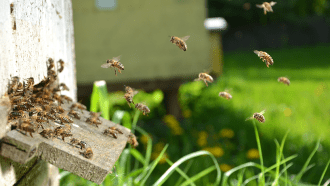
What do animals do during a solar eclipse?
A citizen-science experiment used the Great American Eclipse of 2017 to gather the largest dataset ever of animal responses to a sun-block.
- Brain
Many U.S. football players had brain disease, data show
The brains of more than 200 former football players were donated to science upon their deaths. Signs of severe brain trauma showed up in the vast majority.
- Brain
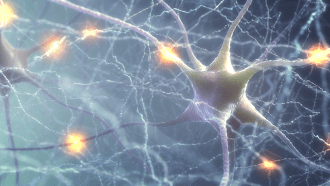
Mild brain injury can cause bead-like swellings in brain cells
Mild head bumps cause temporary swellings — like beads in a necklace — within brain cells. If cells get enough time to heal, those “beads” will disappear.
- Animals
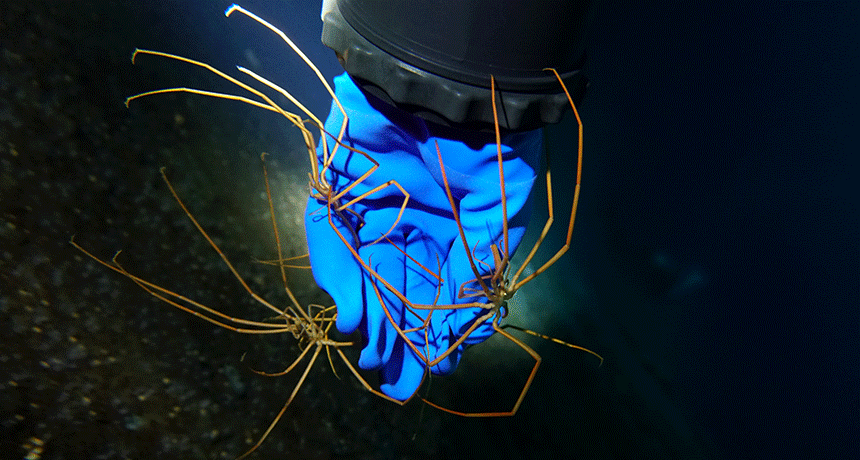
Giant Antarctic sea spiders breathe really strangely
Sea spiders have many bizarre body systems. Scientists have now discovered that they breathe and circulate oxygen in a way never seen before.
- Life
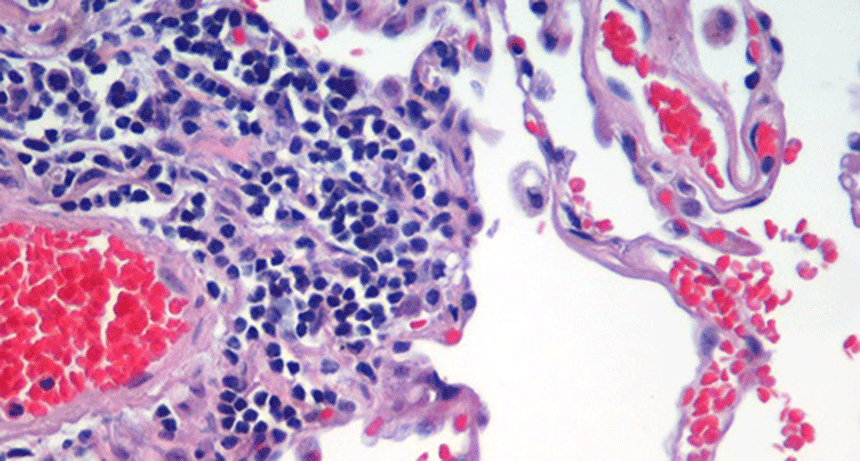
Scientists Say: Histology
When scientists study the parts of an animal or plant, they are studying anatomy. When they need a microscope to see the details of that anatomy, they are studying histology.
- Ecosystems
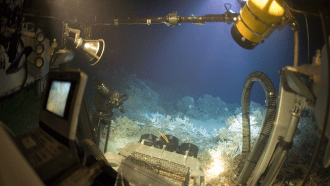
Cool Jobs: Science deep beneath the waves
These scientists probe the sea’s depths, its strange inhabitants, the movement of water and how life evolves in extremes.
- Animals
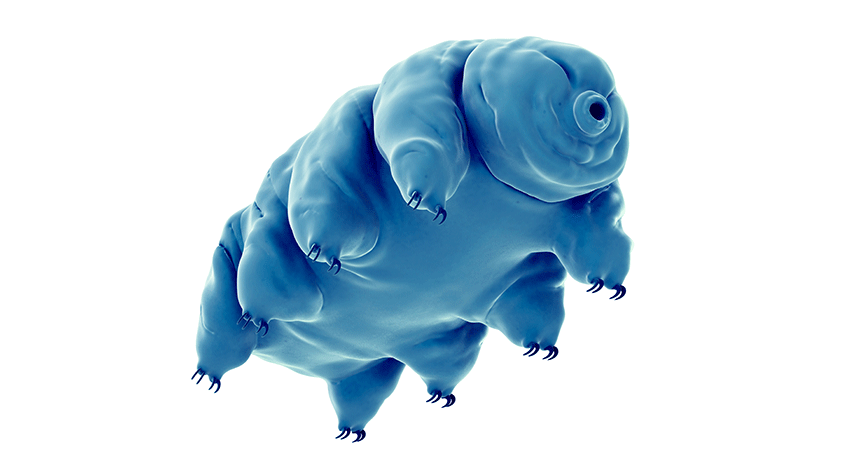
This tiny animal is apocalypse-proof
Microscopic animals called water bears can survive nearly any kind of apocalypse, from asteroids and nuclear war to exploding stars.
- Animals
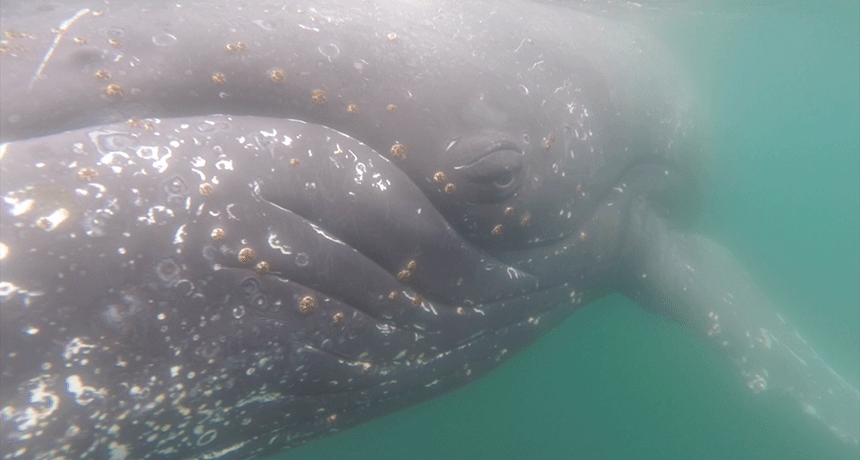
Humpbacks flap their flippers like underwater birds
Surprising new video shows humpback whales flapping their front flippers to move their massive bodies toward their prey.
- Animals
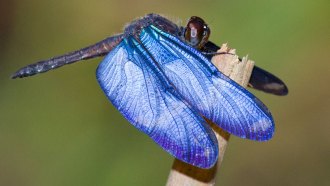
Could a dragonfly’s wings be alive — and breathing?
Highly magnified image showing what looks like breathing tubes suggests the morpho dragonfly’s wings may be unexpectedly alive.
- Genetics
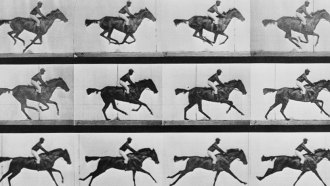
Scientists hide a real movie within a germ’s DNA
A gene-editing technology called CRISPR helped scientists encode a short movie in the DNA of E. coli bacteria.
- Genetics
Explainer: How CRISPR works
Scientists are using a tool called CRISPR to edit DNA in all types of cells.
- Animals
Night lights have a dark side
Artificial light at night not only affects our view of the night sky, but also has the ability to impair animal behaviors — and probably our health.