Life
- Animals
Rats can chronicle human history
Rats have lived alongside people for thousands of years. Now, scientists can study the rats and their leavings to learn more about ourselves.
- Animals
Ancient ‘ManBearPig’ mammal lived fast — and died young
Developing in the womb for a while — but being born ready to take on the world — may have helped post-dinosaur mammals rise to dominance.
- Animals
Dogs and other animals could aid the spread of monkeypox
Now that monkeypox has spread to a dog, researchers fear other species could help the virus become widespread outside of Africa for the first time.
- Animals
Explainer: What is mpox (formerly monkeypox)?
Once rare, the viral disease monkeypox exploded onto the global scene for the first time in 2022.
- Chemistry
No sun? No prob! A new process might soon grow plants in the dark
Teamwork makes green-work! Collaborating scientists came up with an electrifying farming trick that could make sunlight optional.
- Animals
News stories about spiders are unfairly negative
Nearly half of news stories about people-spider encounters contain errors, according to a new study. And those falsehoods tend to have a negative spin.
- Animals
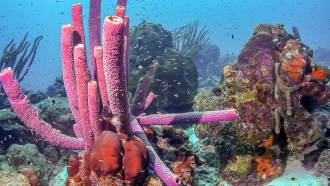
Sea sponges spew slow-motion snot rockets to clear out their pores
Sea sponges rely on a sneezing technique to clear their pores. The mucus flushes out debris — and provides a snack for other marine life.
- Brain
Scientists Say: Cognition
Cognition is involved in all conscious mental activity, from thinking and reasoning to remembering.
- Brain
Let’s learn about reading
Reading can be fun — but it can also be really hard. New research is exploring how to make reading easier for people of all ability levels.
- Animals
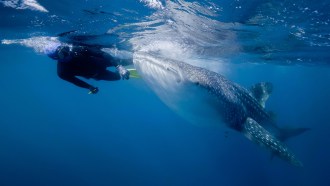
Whale sharks may be the world’s largest omnivores
Chemical clues in the sharks’ skin show that the animals eat and digest algae.
- Genetics
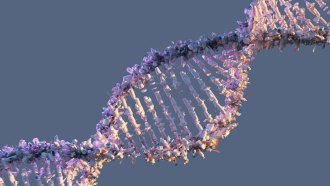
Scientists Say: DNA
Short for deoxyribonucleic acid, DNA is the molecule that determines how each living thing looks and works.
- Animals
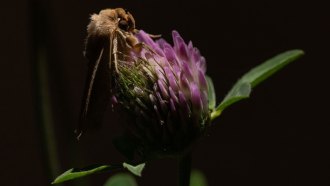
When bees are away, moths come out to pollinate
Camera footage reveals that moths make roughly a third of the visits to red clover, working under the cover of night.