Microbes
- Microbes
Fossils show sign of ancient vampire microbes
Scientists have found 750-million-year-old fossils of cells with puncture wounds. This appears to offer evidence that vampirelike creatures sucked them dry.
- Chemistry
Slime cities
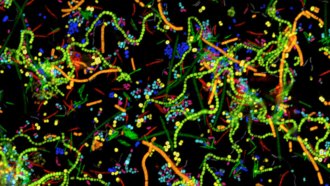
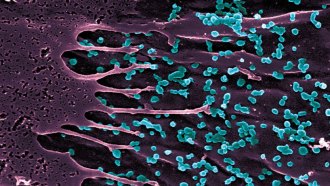
Biofilms are like tiny cities of bacteria — some harmless, others destructive. Scientists are learning how to keep these microscopic metropolises under control.
- Genetics
The earliest evidence of plague
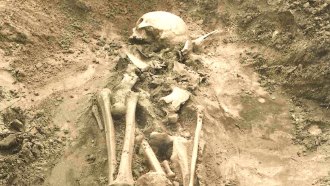
Plague is best known as the killer disease that wiped out nearly half of Europe during the 1300s. But the germ infected people up to 3,000 years earlier than that, DNA from ancient teeth now show.
- Chemistry
Mealworms chow down on plastic
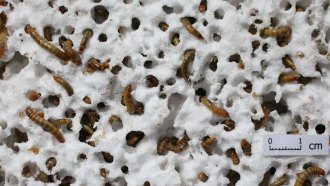
Gut bacteria in mealworms break down polystyrene. Feeding plastic to the worms, or the germs they carry, could be a way to get rid of these wastes.
- Agriculture
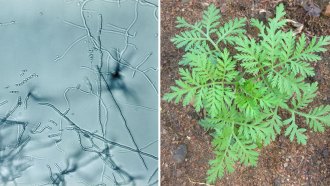
The dirt on soil
More than just dirt, soils teem with microbes essential for growing crops. Soils also help prevent floods and even play a role in climate change.
- Health & Medicine
News Brief: People shed clouds of tell-tale germs
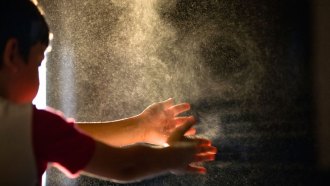
Even after someone has left a room, a cloud of his or her germs laces the air, new data show. Watch out: That mix can be very individual — and even ID you!
- Animals
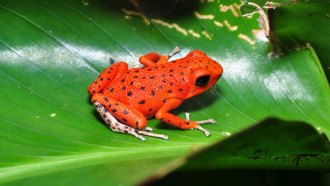
Cool Jobs: Finding new uses for nature’s poisons
Scientists study toxins and other natural compounds in search of alternatives to ineffective antibiotics and dangerous pesticides.
- Health & Medicine
Nobel goes for developing drugs from nature
The 2015 Nobel Prize in medicine went to scientists who used nature as the model for important human drugs to combat malaria and serious infections.
- Agriculture
‘Wildlife-free’ farms don’t make salads safer
Scientists find that removing wildlife from farms did not make raw vegetables safer to eat.
- Animals
Chikungunya wings its way north — on mosquitoes
A mosquito-borne virus once found only in the tropics has adapted to survive in mosquitoes in cooler places, such as Europe and North America.
- Health & Medicine
How ‘brain-eating’ amoebas kill
When people infected with a “brain-eating amoeba” die, their own immune systems might be to blame.
- Health & Medicine
Five things to know about ‘brain-eating’ amoebas
These parasites can be scary, but they rarely trigger infections. Still, knowing more about them can help you avoid behaviors that heighten risks.