Tech
- Chemistry
A new electric surgery tool may someday fix nose, ear and eye problems
A new surgery tool uses electricity to reshape ear and nose tissue in minutes, without pain. Someday, it might even work on eyes to restore normal vision.
- Physics
Sound ways — literally — to move and filter things
New technologies use sound waves to move and levitate objects. It’s not magic — it’s acoustophoresis.
- Chemistry
Tiny new magnets are not only squishy but also liquid
Researchers have just created liquid droplets that behave like tiny bar magnets. The movement of these external magnets might help control robots and more.
- Brain
This brain region may make lifelike robots creep you out
Robots that look too much like real people can be unsettling. Scientists identified a brain region that may be behind these uneasy feelings.
- Earth
Sunlight can produce energy and clean water at the same time
A new device can make electricity from the sun. What makes it truly special, however: It uses waste heat from the system to turn dirty water or salty water into drinking water.
- Physics
This device turns the kilogram’s new definition into a real mass
A new suitcase-sized device will be able to measure small masses — around 10 grams — with surprising accuracy.
- Planets
Was that a Marsquake?
‘Marsquakes’ could help scientists learn more about the Red Planet’s inner activity.
- Computing
This robot’s parts are helpless alone, but turn smart as they team up
In a new system called “particle robotics,” many small, simple helpless units can seemingly come to life and start moving when amassed into a team.
- Earth
Ocean energy could be the wave of the future
Energy systems that turn the power of ocean waves into electrical energy could be on the horizon — or pumping away near the sea floor.
- Computing
Novel fabric could turn perspiration into power
Sweat cools people by evaporating. A teen now wants to use it to generate electricity as well.
- Humans
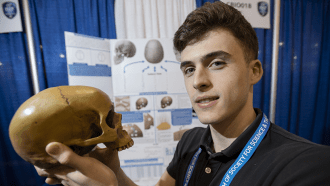
New forensic technique may better gauge age at death
An 18-year-old student from Ackworth, England, has come up with a better way to estimate the age at death for many human remains. It needs only a CT scan of the skull.
- Animals
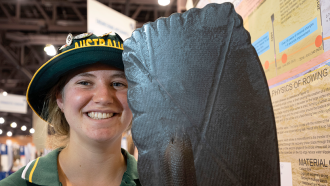
Bumpy edges could be key to record-breaking oars
Inspired by the bumpy edges of flippers on a humpback whale, an Australian teen has redesigned oars for use by competitive rowers.