Tech
- Science & Society
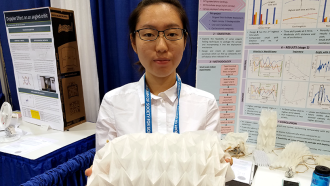
How to develop more ecofriendly parachutes for disaster relief
A teen researcher from Singapore suggests that parachutes made from folded paper could be a more ecofriendly choice than nylon chutes for delivering disaster-relief supplies.
- Science & Society
This fish ‘tag’ runs on fish power
Tags that researchers use to track fish can run out of power. A teen from Taiwan invented a tag that converts fish swimming into the electricity needed to keep it running.
- Computing
You can fight back against cyberattacks
Cyberattacks have cut power to a major city and delayed the delivery of medicine. Find out how experts combat such attacks and how to protect yourself.
- Physics
Heat signatures help track down old and still deadly land mines
A new technique for locating land mines uses infrared cameras on drones. The novel technology uses temperature differences to find camouflaged mines before anyone might accidentally step on them.
- Computing
These scientists help rescue ‘broken’ digital art
Computer-based art is more fragile than you might think. Fortunately, computer science offers new ways to restore these digital creations.
- Physics
It took a ‘virtual’ telescope to actually picture a black hole
Here’s how scientists connected eight observatories across the world to create one Earth-sized telescope. This is what it took to create an image of a black hole.
- Chemistry
Shape-shifting chemical is key to new solar battery
Storing solar energy is a challenge. A new, shape-shifting molecule may provide a solution.
- Chemistry
Smartphone app helps researchers track art ‘acne’
Metal soaps can form damaging blisters on the surface of oil paintings. Scientists are tracking these “breakouts” to protect priceless art.
- Computing
Rise of the botnets
Botnets are armies of connected, infected computers that attack websites and other online businesses. Some scientists have found ways to use connected computers for good, too.
- Fossils
This robot shows how an ancient creature might have walked
Scientists used fossils, footprints, a computer models and a life-sized walking robot to find out how an ancient creature moved.
- Materials Science
A self-cleaning glass keeps itself spotless underwater
Microscopic pancake-like structures keep dirt and oil from sticking to the surface of this self-cleaning glass.
- Computing
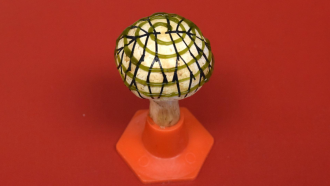
This bionic mushroom makes electricity
What do you get when you combine fungi, graphene, 3-D printing and photosynthetic bacteria? A mushroom that makes electricity.