All Stories
- Fossils
This paleontologist studies ancient mammal movement — virtually
Anne Kort uses computers to piece together the fossils of ancient mammals. Studying fossils virtually offers her more ways to study fragile remains.
- Artificial Intelligence
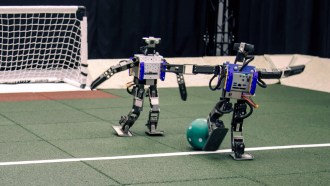
Soccer-playing robots show how nimble AI-powered machines can be
Being controlled by reinforcement learning — a type of AI — helps robots navigate tough terrain. This could bring computer smarts to the real world.
- Space
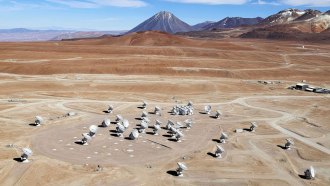
Scientists Say: Astronomical interferometry
This technique links up many telescopes to see the universe in finer detail than any single telescope could alone.
- Physics
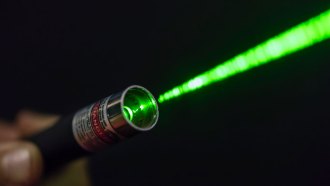
Experiment: Measure the speed of light with a laser
Grab a laser pointer and some Jell-O, because today we’re measuring the speed of light.
- Earth
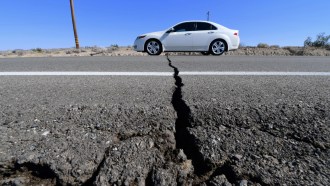
Analyze This: Where are U.S. earthquakes most likely?
A model used data on historical quakes and measurements from active faults to forecast risks of damaging earthquakes in the next 100 years.
- Health & Medicine
This spice could be the basis of a smart, infection-fighting bandage
Infused with yellow turmeric, the bandage turns red to highlight the pH of an infection. A teen showed that at the 2024 Regeneron ISEF competition.
- Animals
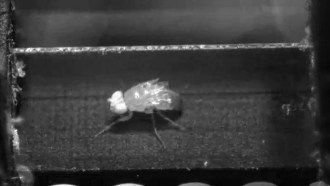
Tiny treadmills reveal how fruit flies sprint
Forcing fruit flies to move shows how the insects coordinate their steps. This holds clues to other animals’ brains and movement.
- Chemistry
Scientists Say: Excitation
Excited electrons are to thank for dazzling fireworks displays, plants harnessing energy, the semiconductors behind modern tech and more.
- Tech
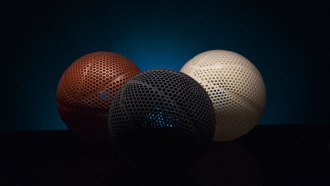
Holey basketballs! 3-D printing could be a game-changer
Wilson’s 3-D printed “airless” basketball is nearly silent and will never deflate, but will it prove a slam dunk for players and fans?
- Space
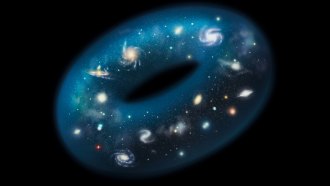
The shape of our universe may be complex — like a doughnut
Physicists haven’t yet ruled out the possibility that in our universe, space loops back on itself.
- Animals
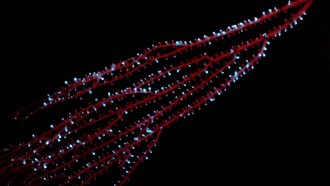
Corals may have been the first life forms to glow in the dark
Ancestors of modern octocorals may have lit up the deep sea as far back as 540 million years ago.
- Health & Medicine
Period blood could help diagnose diabetes and other illnesses
A new test for diabetes is the first diagnostic tool based on period blood. But it may be just the beginning.